
Traditional Clothing in Uganda: The Stories Behind the Gomesi, Kanzu and Barkcloth
Ogundeyi Faith
Discover the stories behind traditional clothing in Uganda, from the ceremonial Gomesi and Kanzu to the ancient craft of barkcloth.
Traditional Clothing in Uganda: The Stories Behind the Gomesi, Kanzu and Barkcloth
The first thing you may notice is the colour.
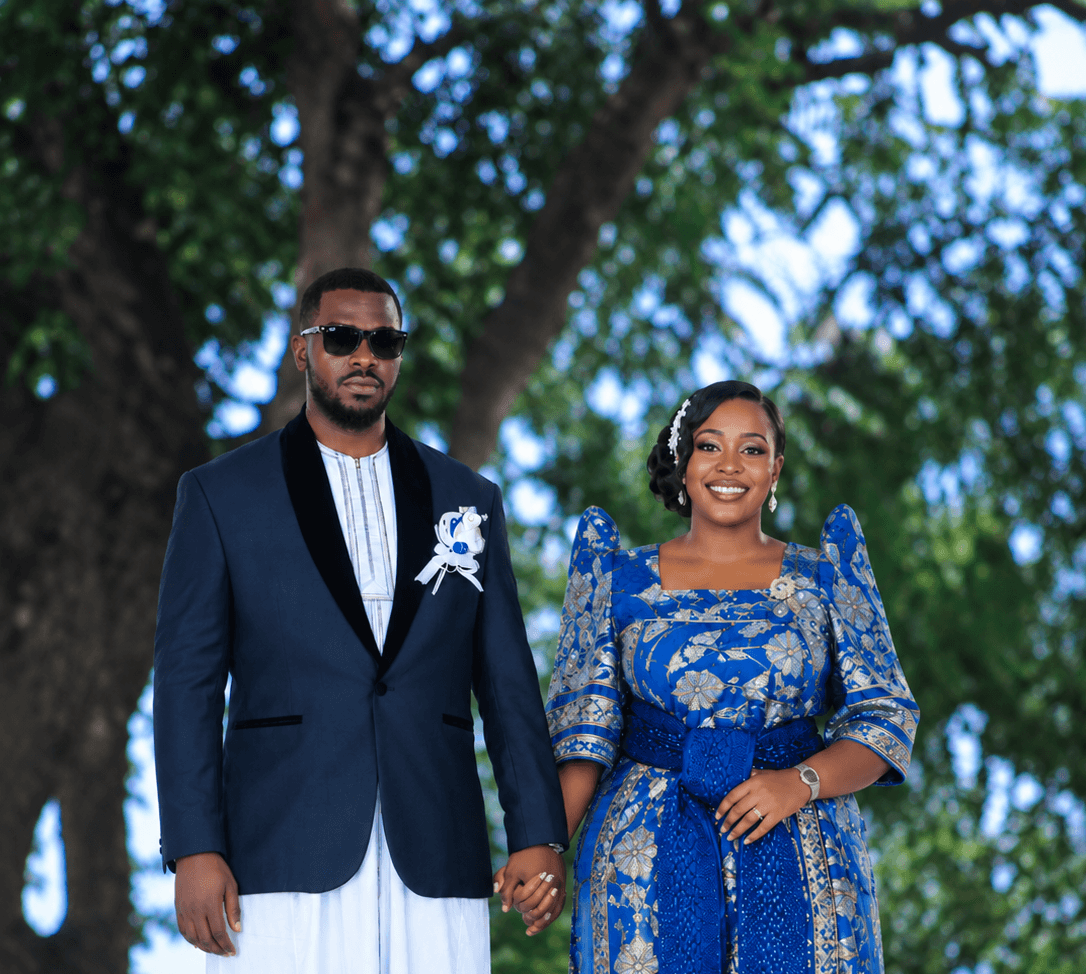
A woman walks into a Ugandan ceremony wearing a floor-length Gomesi, its wide sleeves sitting neatly over her shoulders and a long sash gathered around her waist. Nearby, men in long white Kanzus move between groups of guests, some wearing jackets over them.
Then there is barkcloth, softer and more earthy in appearance, with its unmistakable terracotta colour and texture.
If you are visiting Uganda, it can be tempting to see these simply as beautiful clothes.
Until you start paying attention for a little longer.
What someone wears can tell you something about where they come from, the occasion they are attending, their family, their community and the traditions they want to honour.
And that is what makes traditional clothing in Uganda worth understanding, because there is no single traditional Ugandan outfit.
Uganda is home to many communities, each with its own histories, ceremonies and ways of expressing identity.
The Gomesi, Kanzu and barkcloth are some of the most recognisable examples, but each has a story of its own.
Why clothing matters in Ugandan culture
Clothing in Uganda has never been simply about covering the body.
Like food, music, names and ceremonies, dress can be part of how people express belonging.
This becomes especially obvious at important occasions.
Walk into a traditional introduction ceremony and you are unlikely to see people dressed as casually as they might be on an ordinary Saturday. Families may coordinate fabrics, choose formal traditional garments and spend considerable time preparing what they will wear.
The clothing becomes part of the occasion itself.
In Buganda, for example, the Gomesi and Kanzu are closely associated with formal occasions and ceremonies. The Gomesi became particularly established among Baganda women, while the Kanzu became formal menswear among Baganda men. Both have since travelled beyond Buganda and become familiar across much of Uganda.
When someone wears a Gomesi today, it does not necessarily mean they are Baganda. But understanding its roots helps explain why the garment carries such weight.
The Gomesi — more than a beautiful dress
If you have seen photographs of Ugandan weddings, there is a good chance you have seen a Gomesi.
It is a long, floor-length dress with a square neckline, short puffed or butterfly-shaped sleeves and a broad sash tied around the waist. Depending on the fabric and occasion, it can look understated or extraordinarily elaborate.
The garment is also known as a Busuuti, while Bodingi or variations of the word are sometimes used because of its association with boarding school history.
Its history, however, is more complicated than the simple story that “the Gomesi is an ancient Ugandan dress”.
The modern Gomesi appears to have taken shape in the early twentieth century, with accounts connecting its development to Gayaza High School and a Goan/Indian tailor named Gomes. According to accounts documented by Ugandan historians and researchers, the garment developed from the earlier Suuka style and was adapted into a more practical dress for the girls at the school.
Exactly who designed the first version and precisely when it happened is disputed. Contemporary Ugandan reporting records different versions of the story, so it is safer to describe the Gomes/Gayaza account as the most commonly cited origin story rather than an uncontested fact.
What is much clearer is what happened afterwards.
The Gomesi became strongly associated with Buganda and gradually spread far beyond it.
Today, you might see women wearing Gomesis at weddings, funerals, church events, graduations, official occasions and, particularly, Kwanjula — the traditional introduction ceremony associated with Buganda.
Imagine arriving at one.
The women may be dressed in carefully chosen Gomesis, often in different colours and fabrics. The men may be wearing Kanzus, sometimes with jackets. Families sit on opposite sides, guests arrive, greetings are exchanged and the clothing becomes part of the visual language of the day.
It is not just about looking good for photographs.
People have dressed for an occasion that matters.
That is why a Gomesi can feel very different when you encounter it at a ceremony rather than on a fashion rack in Kampala.
And the garment is still changing.
Modern Gomesis may use silk, satin, cotton, polyester, brocade and other fabrics, with contemporary designers experimenting with colours, embellishments and silhouettes while retaining the recognisable structure. Ugandan fashion coverage in recent years has documented the introduction of bolder prints, metallic tones, colour blocking, lace and other modern details.
Tradition, in other words, has not stopped moving.
The Kanzu — the story behind Uganda’s formal menswear
If the Gomesi is one of the most recognisable forms of women’s ceremonial dress in Uganda, the Kanzu occupies a similar place in men’s formalwear.
The Ugandan Kanzu is a long, loose-fitting tunic, usually white or cream, extending towards the ankles. It is commonly worn with trousers underneath and, particularly for formal occasions, with a Western-style jacket or blazer.
Its history reaches beyond Uganda.
Research on Buganda material culture traces the Kanzu’s introduction to Buganda to contact with Arab traders in the nineteenth century. It was initially associated with people of high social standing who could access imported clothing, and it gradually became formal wear among Baganda men.
That history is worth remembering because it shows that traditional clothing does not always mean clothing that existed unchanged for thousands of years.
Cultures borrow, adapt and make things their own.
The Kanzu is a good example.
What began within wider Indian Ocean and East African networks became firmly embedded in Buganda’s own ceremonial culture.
Today, a Kanzu can be worn to weddings, introduction ceremonies, religious occasions and other formal gatherings. At a Buganda Kwanjula, you may see the groom and members of his delegation wearing Kanzus, often paired with jackets.
The result is distinctive: the flowing white tunic beneath a tailored jacket creates an outfit that looks simultaneously traditional and formal.
And you may notice something else.
Nobody looks as though they are wearing a costume. They are dressed for the occasion.
That difference is important when you are experiencing cultural clothing as a traveller.
Barkcloth — one of Uganda’s oldest textile traditions
Barkcloth looks completely different from others.
There is no glossy satin or bright printed fabric.
Instead, you see a warm terracotta-brown material with a soft, fibrous texture.
And remarkably, it begins with a tree.
Barkcloth is traditionally made from the inner bark of the Mutuba tree (Ficus natalensis). During the wet season, artisans harvest the bark and repeatedly beat it with wooden mallets until it becomes soft, flexible and cloth-like. The process is physically demanding and requires skill.
The craft is particularly associated with the Baganda people of Buganda.
UNESCO describes barkcloth making as an ancient Baganda craft, traditionally practised by members of the Ngonge clan, whose hereditary chief craftsman was known as the Kaboggoza. The practice was historically widespread across Buganda, with workshops found in many villages.
Barkcloth was not simply fabric.
It could be worn, used as bedding and storage material, and incorporated into important cultural practices. It was also associated with royalty and status: ordinary barkcloth was generally terracotta, while barkcloth associated with kings and chiefs could be dyed black or white and worn differently.
Its ceremonial importance remains. Barkcloth is used in contexts including coronations, healing ceremonies, funerals and cultural gatherings.
Its history also tells another story about Uganda: change.
The arrival of cotton cloth through nineteenth-century trade contributed to the decline of barkcloth production and everyday use. Over time, its role became increasingly connected with cultural and spiritual functions.
Today, however, the craft is being revitalised.
UNESCO has supported efforts to train younger artisans, encourage the planting and sustainable use of Mutuba trees, and find new ways of sustaining barkcloth production. Contemporary applications include decorative objects, bags, mats and other products.
So when you touch a piece of barkcloth in Uganda, you are not simply touching an unusual textile.
You are touching a material connected to a much older craft tradition.
Uganda does not have one traditional dress
This is perhaps the most important thing to remember.
Search for “traditional clothing in Uganda” online and you will quickly encounter photographs of Gomesis and Kanzus.
They are important, but they do not represent every Ugandan community.
Uganda’s cultural diversity means that clothing traditions have varied according to community, environment, history and social practices.
Among the Karamojong in northeastern Uganda, for example, traditional cultural items can include distinctive beadwork, headgear, wraps and handmade footwear. A community museum near Moroto displays items including Karamojong tartan wraps decorated with handmade beads.
Historical clothing traditions among the Bakiga of southwestern Uganda were also very different. Uganda Tourism Center records earlier use of animal skins for men’s and women’s clothing, reflecting a time when locally available materials played a much greater role in everyday dress.
And barkcloth itself was not confined absolutely to Buganda. UNESCO documentation notes that the Baganda tradition influenced nearby communities, including the Basoga, Banyoro, Batooro and Madi, although the practice developed to different degrees among them.
This is why it is better to talk about traditional clothes in Uganda rather than searching for one national costume.
There are many Ugandans within Uganda.
What Ugandans wear for weddings and cultural ceremonies
Few occasions make clothing more visible than a Ugandan wedding.
In Buganda, the Kwanjula is particularly important.
It is the traditional introduction ceremony in which the groom and his family formally meet the bride’s family. Clothing becomes part of the formality: men may wear Kanzus while women wear Gomesis, creating a striking visual distinction from everyday Kampala streetwear.
But Kwanjula is specifically a Buganda term and tradition.
Other Ugandan communities have their own marriage and introduction practices, with different names, customs and forms of dress. Treating every traditional wedding in Uganda as a Kwanjula would be like assuming every wedding across Europe follows the same ceremony simply because they all involve marriage.
The same principle applies to religious ceremonies, cultural festivals and royal or kingdom events.
Clothing often becomes more formal because the occasion itself carries greater social weight.
It can be a way of showing respect to elders, family and community.
Traditional clothing in modern Uganda
One of the most interesting things about Ugandan traditional clothing is that it is not trapped in the past.
A young Ugandan woman can wear a Gomesi to a family ceremony and then spend the next day in jeans and trainers.
A Kanzu can be paired with a modern blazer.
Traditional fabrics and techniques can appear in contemporary fashion.
Designers experiment with cuts, materials, prints and styling. Social media has also given young Ugandans new ways to showcase and reinterpret cultural fashion.
Even barkcloth is finding contemporary applications beyond its older uses.
This is what living culture looks like. It changes without necessarily disappearing.
What travellers should know about cultural clothing
If you are photographing someone in traditional attire, ask questions.
It takes only a moment, and it changes the interaction from taking a photograph of someone to sharing a moment with them.
The same applies if you are invited to wear traditional attire.
If a cultural experience offers you the chance to dress in a Gomesi, Kanzu or another garment, ask your host how it should be worn and what the occasion calls for.
And remember that traditional clothing is not a costume.
A garment may carry family, religious, ceremonial or community significance that you cannot see from the outside.
You do not need to avoid participating. In fact, being invited to participate can be one of the most memorable parts of travelling.
Just let the people who know the tradition guide you.
That approach also fits the wider etiquette of travelling in Uganda: be curious, dress respectfully, ask questions and understand that different communities may have different expectations.
Where can travellers experience Ugandan culture?
You can read about Ugandan clothing before your trip, but some things only make sense when you see them in context.
In Kampala, places such as Ndere Cultural Centre offer another way into Uganda’s cultural diversity through music, dance and storytelling from different parts of the country. You begin to see that there is no single Ugandan way of dressing, celebrating or expressing culture.
Community-based experiences offer something more personal.
At Ewaffe Cultural Village in Naggalama, Mukono, for example, visitors can learn about aspects of Buganda culture through food, storytelling, traditional games, village walks and demonstrations of everyday traditions. This kind of experience gives you the opportunity to ask questions and hear explanations directly from people who know the culture.
A photograph can show you what a Gomesi looks like. A person can tell you why their family chose a particular fabric for a ceremony. An artisan can show you how the bark of a Mutuba tree is transformed into cloth. A cultural guide can explain what is happening around you when you arrive at a ceremony — who is being honoured, why people are dressed a certain way and what you should expect as a visitor.
Those are details you are unlikely to pick up from a photograph or a search result.
And that is one of the pleasures of cultural travel in Uganda. You are not simply looking at traditions from the outside; you have the chance to meet the people who keep them alive, ask questions and understand the meaning behind what you are seeing.
That is the difference between seeing Ugandan culture and experiencing it.
See the Stories Behind Uganda's Culture
There is only so much a screen can show you.
You can learn what a Gomesi looks like, read about the history of barkcloth and understand why the Kanzu is worn at formal occasions. But when you sit with Ugandans, listen to their stories, taste their food and watch traditions being practised in real life, the details begin to mean something different.
That is the Uganda worth experiencing.
At Everything Uganda, we believe travelling through Uganda should be about more than ticking places off a list. It should give you opportunities to understand the people, communities and traditions that make each place what it is.
So when you are planning your Uganda trip, leave room for culture.
Explore Everything Uganda's cultural experiences and discover the stories, people and traditions that you simply cannot experience from behind a screen.