The Ultimate Uganda Packing List — What to Bring, What to Leave Behind
Ogundeyi Faith
Planning a Uganda safari? This practical packing list covers what to bring, what to wear, the essential gear to pack, and what to leave at home.
The Ultimate Uganda Packing List — What to Bring, What to Leave Behind
A good Uganda packing list starts with one important fact: Uganda is not one climate. You could wake up in Bwindi at 10°C (50°F) and later find yourself on a game drive in Murchison Falls at 30°C (86°F). The same trip can take you from cold, wet forest to hot savannah, then onto a boat cruise or an adventure in Jinja.
So, what to pack for a Uganda safari? Think layers, practical clothing and gear that can handle very different activities. And, having watched travellers arrive with brand-new hiking boots or jeans for a gorilla trek, there are a few things worth getting right before you leave home.
Documents and Money
Your Uganda travel essentials start with the paperwork. Carry a passport with at least six months' validity and a minimum of three blank pages. You will also need an e-Visa, applied for through the official Uganda immigration portal, visas.immigration.go.ug. If you have booked your gorilla trek yourself, carry your gorilla trekking permit, as well as travel insurance that covers gorilla trekking and medical evacuation.
Bring your physical yellow fever vaccination card if arriving from or via a country where yellow fever occurs.
Visa and Mastercard are accepted in cities and lodges, but carry US dollars in cash. Notes must be issued after 2006; some lodges require notes issued after 2010, and older bills are frequently refused. Uganda Shillings are useful for local markets and small purchases. ATMs are available in Kampala, Entebbe and major towns, but can be unreliable in remote park areas.
Clothing — The Rules That Actually Matter
If you are wondering what to wear gorilla trekking in Uganda, start with one rule: keep your clothing practical and neutral.
Choose khaki, olive, brown, muted grey and muted green. Avoid blue and black for outdoor activities in national parks because they attract tsetse flies. Bright colours can disturb wildlife, while white clothing quickly shows Uganda's red murram dust. Army camouflage clothing and hats are forbidden in Uganda's national parks, although ordinary khaki is fine.
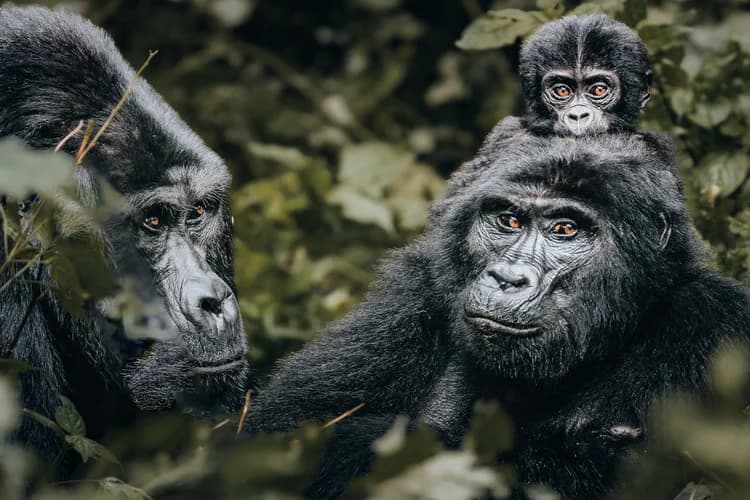
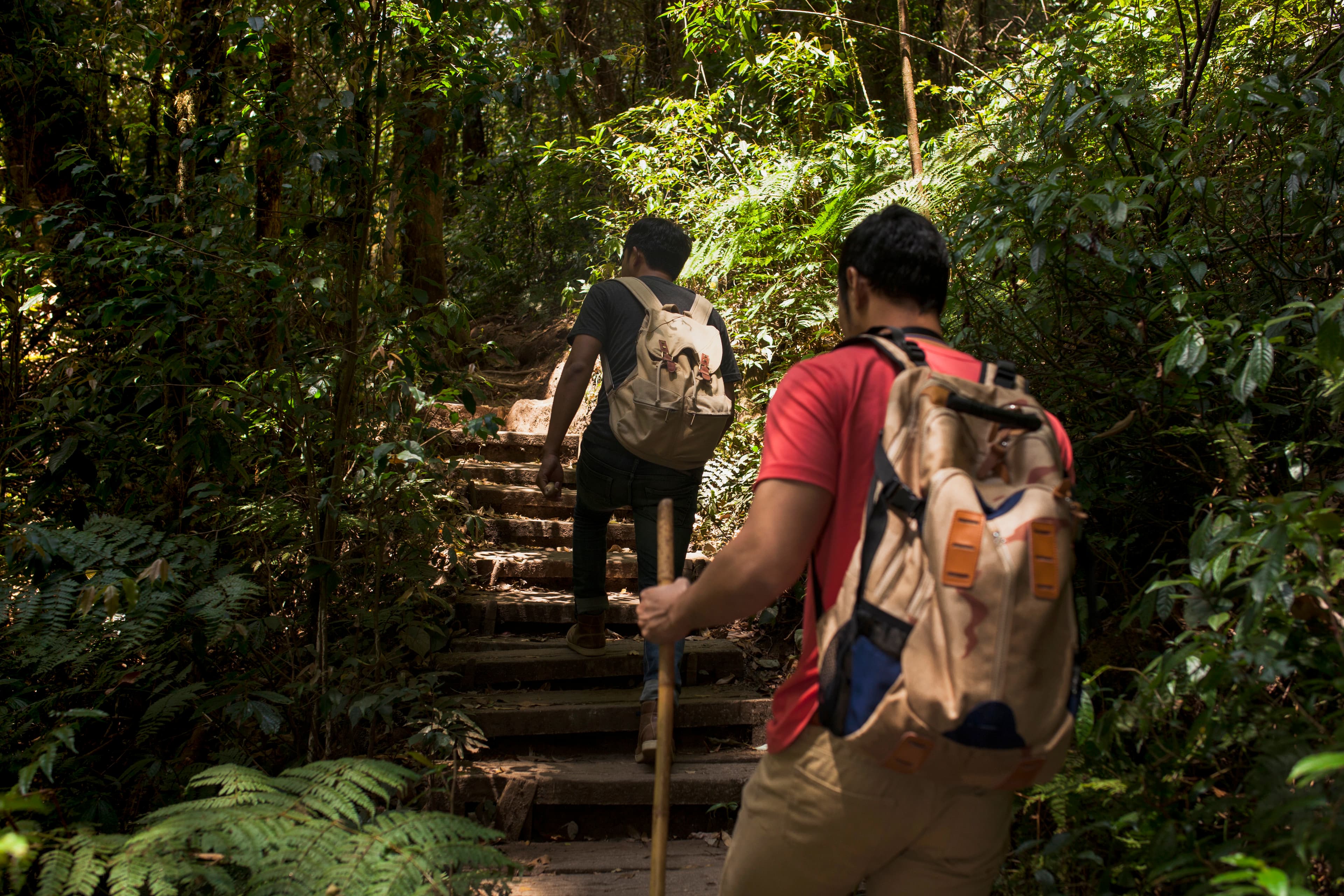
For gorilla trekking in Bwindi, clothing needs to deal with wet, steep and forested terrain. Long-sleeved shirts help protect your arms from nettles, thorns and insects. Wear long trousers, but skip the jeans. Jeans are heavy, restrictive and slow to dry when wet. Nylon zip-off convertible trousers are a much better option: wear them long for trekking and convert them to shorts for warmer game-drive conditions.
Your waterproof hiking boots should already be broken in. This is the single most important detail on a gorilla trekking packing list in Uganda. New boots can cause blisters on steep, wet and uneven forest terrain, so don't make your first serious walk in them the trek itself.
Pack wool or moisture-wicking socks rather than cotton, and choose socks long enough to tuck your trousers into. Full-length gaiters help keep your boots cleaner and drier on the forest floor. Gardening gloves are another small item that makes a surprisingly big difference: they protect your hands from stinging nettles on gorilla and chimpanzee treks. Almost nobody brings them, but almost everyone wishes they had.
A light fleece or midlayer is useful for cold Bwindi mornings. For game drives in places such as Queen Elizabeth National Park, lighter neutral clothing, a light jacket for early starts, a brimmed sun hat and sunglasses are practical choices.
If you are travelling at different times of year, check the best time to visit Uganda before you finalise your layers.
Footwear
For most Uganda itineraries, two pairs are enough.
Your main pair should be waterproof hiking boots with good ankle support and tread, already broken in before you travel. They are essential for gorilla trekking, chimpanzee trekking and Rwenzori Mountains trekking.
The most common mistake is arriving with new boots.
Bring comfortable walking shoes or sandals for lodge evenings, Kampala and lower-intensity days. If you are rafting in Jinja, rafting companies provide water shoes, so there is no need to pack your own.
Gear and Equipment
A waterproof daypack, or one with a rain cover, should be large enough for your water, camera, rain jacket and snacks. If you are taking domestic flights, use a soft bag rather than a hard case because soft duffels work better with safari vehicles and small aircraft.
Pack a headtorch with spare batteries. Power cuts are common at remote lodges, and a headtorch becomes essential when you have a 4:30am pre-trek start or need to walk along an unlit path at night. It is one of those items people remember only after they need it.
A reusable water bottle of at least one litre is useful; lodges provide drinking water. For photography, a long zoom is useful on game drives, while a compact camera or phone can be more practical around gorillas. Keep electronics protected with a waterproof case or dry bag.
Binoculars in 8x42 or 10x42 are useful for game drives and birding. A portable power bank is worth carrying because remote lodges may only charge devices during generator hours.
Finally, Uganda uses UK-style Type G plugs — three rectangular pins — so a Type G adapter is essential.
Health and Medical Kit
Carry your physical yellow fever card if you are arriving from or via a country where yellow fever occurs. A digital copy is not a substitute for the physical card.
Malaria is endemic in Uganda, so consult a travel health specialist about malaria prophylaxis before departure. Your kit should also include insect repellent with DEET and SPF 30+ sunscreen, particularly for open-top game drives and boat cruises.
Bring enough of your personal prescription medication for the entire trip, as some medicines may not be available in remote areas.
A basic first-aid kit should include adhesive bandages, antiseptic wipes, blister pads and pain relievers. Rehydration sachets are useful on long, hot days in Murchison Falls or Kidepo. Bring hand sanitiser too.
For gorilla encounters, face masks are mandatory when you are in close proximity to gorillas. Guides usually carry spares, but bring your own.
Technology and Connectivity
MTN and Airtel SIM cards are available at Entebbe Airport when you arrive. They are affordable and work well in cities and larger towns, although coverage is limited in remote national parks.
If you need connectivity immediately, enable international roaming before you travel. Many safari lodges offer Wi-Fi, but expect the signal to be weak or intermittent in wilderness areas.
Download offline maps before departure so you still have navigation information when your signal disappears. And keep your power bank handy, particularly at remote lodges.
A little disconnection is part of being in Uganda's wilderness. It is not necessarily a problem to solve.
What to Leave Behind
Leave the hard-shell suitcase at home. It is impractical in safari vehicles and small aircraft.
Leave the jeans behind for gorilla trekking: they are heavy, restrictive and slow to dry. Do not bring new hiking boots; break them in before travelling.
Bright and white clothing is best avoided, and army camouflage of any kind is banned in Uganda's national parks.
Excessive jewellery and valuables are unnecessary. And if your itinerary includes Rwanda, do not bring plastic carrier bags, which are banned there.
Ready to Pack for Uganda?
Bring what this list tells you to bring, leave behind what it tells you to leave behind, and let Uganda handle the rest.
Whether your trip includes gorilla trekking in Bwindi, Queen Elizabeth, Rwenzori trekking, Kidepo or a Jinja adventure, the right gear makes a real difference. You can also explore our Uganda package when planning your itinerary.
Not sure what to pack for your specific itinerary? Message us — we'll send you a personalized packing list based on exactly what you're doing and when.