
Best Time to Visit Uganda: Complete 2026 Guide for foreigners
Ogundeyi Faith
Best Time to Visit Uganda: Complete 2026 Guide
The best time to visit Uganda depends entirely on the kind of trip you want to have there.
That sounds like a vague travel answer until you see Uganda in different seasons and realise they almost feel like different countries.
I have watched elephants gather around shrinking waterholes during the dry months, and I have stood in Bwindi after rain while the entire forest steamed green around us.
Uganda sits on the equator, with temperatures staying around 20–27°C year-round, but the weather in Uganda still changes the experience completely.
This is not like planning a trip to Spain where you avoid winter and pick August. Uganda rewards the traveller who understands its seasons. This guide shows you which Uganda you get and when.
Uganda’s seasons — the short version
Uganda keeps things surprisingly simple: two dry seasons and two wet seasons.
The long dry season runs from June to September. The short dry season arrives between December and February. Then come the long rains from March to May, followed by the shorter rains in October and November.
Temperatures stay fairly consistent year-round, usually between 20–27°C. Uganda sits on the equator, but altitude keeps things comfortable rather than unbearably hot.
And despite what people imagine, the wet season rarely means endless rain all day. Most mornings still begin warm and bright before afternoon showers roll in.
You can still trek. You can still go on safari. You can still sit outside your lodge in the evening listening to hippos somewhere in the dark.
One honest warning though: Bwindi Impenetrable Forest is a rainforest. Rain can happen in every month of the year — even during the dry season in Uganda. Pack waterproofs regardless of when you visit.
Long Dry Season — June to September
Temperature: 20–26°C
Rainfall: Low with occasional afternoon showers
Best for: Gorilla trekking, Rwenzori trekking, Kidepo safari, general travel
Honest note: Peak season. Gorilla permits for July and August sell quickly, so book 6–10 months ahead.
Short Dry Season — December to February
Temperature: 20–27°C
Rainfall: Low, especially in January and February
Best for: Safari, game drives, boat trips, gorilla trekking
Honest note: Busy during Christmas and New Year. Wildlife viewing is excellent around water sources.
Long Rains — March to May
Temperature: 20–25°C
Rainfall: High, especially in April
Best for: Birdwatching, budget gorilla trekking, chimp trekking, photography
Honest note: Cheapest permits and lodge rates of the year. Some roads become muddy.
Short Rains — October to November
Temperature: 20–26°C
Rainfall: Moderate afternoon showers
Best for: Birdwatching, budget safari, quiet game drives
Honest note: One of Uganda’s most underrated travel windows.
The best time for gorilla trekking
If gorilla trekking is the reason you are coming to Uganda, then June–September and December–February are the best months to recommend.
Uganda June weather, Uganda July weather, and Uganda August weather usually bring firmer trails, clearer paths, and drier trekking conditions inside Bwindi.
The climbs are still tough, nobody walks out of that forest pretending it was a casual stroll, but the dry season makes the ascent far more manageable.
July and August are especially busy, and permits sell out quickly. If those are your travel months, book 6–10 months ahead.
But here is the part most people do not tell you properly: the wet season can be incredible too.
Some of my favourite gorilla trekking memories happened during the rains.
The forest becomes intensely green, mist hangs low between the trees, and everything feels quieter. Because food is more abundant lower on the slopes, gorillas often descend too, which means your trek can actually become shorter during the wet season, not harder.
And then there is the atmosphere. Instead of arriving at a crowded trailhead, you are more likely to feel like one of just eight people moving quietly through the forest with that gorilla family —the permitted maximum — rather than joining a queue at the trailhead.
April, May, and November also come with real budget advantages. Uganda Wildlife Authority discounts gorilla permits by up to 25% during these months. Standard permits cost around £540, while discounted permits drop closer to £405. Lodges reduce prices too.
Honestly, the best time to visit Uganda weather-wise for gorilla trekking depends on the kind of experience you want, peak-season energy or quieter, greener forests that feel almost surreal after rain.
Ready to book? This is peak gorilla trekking season — permits go fast.
The best time for safari
If your idea of Uganda includes dusty game tracks, elephants crossing the road without urgency, and sunsets that look almost fake in real life, then December–February and June–August are the best months to recommend.
These are the drier seasons, when wildlife gathers around rivers and water sources, making game drives in Queen Elizabeth National Park and Murchison Falls National Park especially rewarding.
January and February are particularly good for boat safaris. On the Kazinga Channel and the Nile, you can spend entire afternoons drifting past elephants at the shoreline, buffalo standing knee-deep in water, crocodiles stretched along the banks, and hippos packed together making noise in the dark.
The weather in Uganda Kampala is usually warm and dry during these months too, and the weather makes travelling between parks far easier.
But safari during the wet season feels different in a way I ended up loving.
The landscapes turn intensely green, storms gather dramatically over the plains, and the parks feel quieter. March–May is also when many young animals are born, so game drives feel more alive and unpredictable.
And despite what people assume, the wildlife does not disappear because of rain. Lions are still there. Elephants are still there. The tree-climbing lions of Queen Elizabeth National Park do not suddenly clock out because Uganda October weather brings a few afternoon showers.
Safari season is open. Wildlife is concentrated around water. → View Uganda safari packages
The best time for the Rwenzori
If you are trekking the Rwenzori Mountains, June–August is the window you want.
Uganda August weather usually brings the driest trails, clearer summit views, and the most reliable conditions for the 7–9 day Central Circuit.
And honestly, up there, weather stops feeling like a small detail very quickly.
The Rwenzori are stunning, but they are tough mountains.
During the wet season, upper trails turn muddy fast, cloud cover can swallow the views for days, and the glacial section near Margherita Peak at 5,109 metres becomes far more difficult without clear conditions.
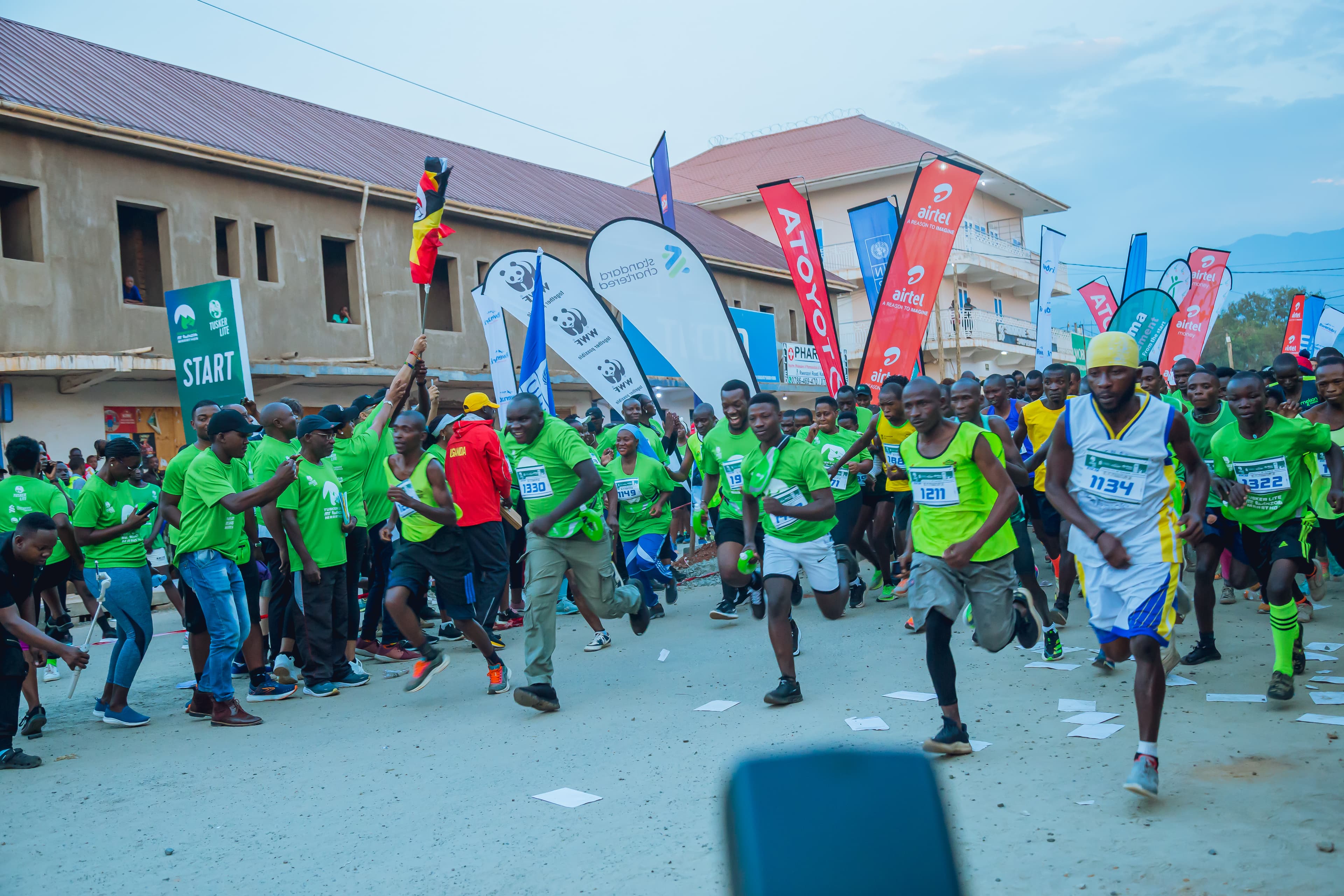
June–August gives you firmer ground and a far smoother trekking experience overall. August also brings the Rwenzori Marathon to Kasese. If you want to combine both, August is your month.
The Mountains of the Moon are at their best June–August.
The wet season — why it might be right for you
Most travel guides talk about Uganda’s wet season like it is something to survive instead of something to experience properly.
Honestly, I think that misses some of the best parts of the country.
First: prices.
Uganda weather in April and weather in Uganda in May come with real advantages for budget travellers. Gorilla permits are discounted by up to 25%, lodges often reduce rates by 20–40%, and you are far more likely to have a quieter trekking experience instead of arriving behind crowds at the trailhead.
Second: birdwatching.
Uganda has more than 1,090 bird species, and between November and February, migratory birds from the northern hemisphere arrive in huge numbers. Uganda November weather turns the forests loud, green, and constantly alive with movement.
Thirdly: The chimpanzees.
In Kibale Forest, the wet season is actually one of the best times to trek because chimps stay lower in the canopy, making them easier to locate.
The wet season is not Uganda’s compromise.
It is Uganda’s secret.
Uganda has 1,090+ bird species. The best time to see migratory birds is November–April. → Plan your trip
Month by month — your quick reference
Month | Weather Summary | Best Activity |
January | Dry, warm, excellent conditions during the short dry season peak. | Safari · Gorilla trekking (→ View safari packages) |
February | Uganda weather February is one of the driest windows of the year. | Gorilla trekking · Game drives (→ Book gorilla permits) |
March | Uganda weather in March brings the first rains and greener landscapes. | Birdwatching · Budget gorilla trekking (→ Wet season discounts) |
April | Uganda weather April is the wettest month with the lowest prices. | Budget travel · Birding (→ Discounted permits) |
May | Weather in Uganda in May remains green while rainfall starts easing. Permits 25% off. | Chimp trekking · Budget safari (→ Wet season packages) |
June | Uganda June weather marks the beginning of the long dry season. | Gorilla trekking · Rwenzori trekking (→ Peak season packages) |
July | Uganda July weather is dry, clear, and extremely popular. | Gorilla trekking · Safari · Rwenzori (→ Book now — fills fast) |
August | Uganda August weather remains excellent for trekking and safari. Rwenzori Marathon (22 Aug). | Gorilla trekking · Kidepo safari (→ View all packages) |
September | Weather in Uganda September still offers excellent dry-season conditions. | Safari · Gorilla trekking (→ September packages) |
October | Uganda October weather introduces the short rains and fewer tourists. | Birdwatching · Budget safari (→ Off-peak value) |
November | Uganda November weather stays wet but quiet and affordable. | Birding · Budget gorilla trekking (→ November discounts) |
December | December weather in Uganda becomes drier again for festive travel. | Safari · Gorilla trekking (→ Plan a December trip) |
Every month, somewhere in Uganda, something extraordinary is happening. The question is not whether to go. It is what you want to see when you get there.
Pick your Uganda. We will help you time it perfectly.
→ Plan your Uganda trip
→ Book gorilla trekking
→ View all Uganda packages