
Giraffe Relocation Uganda 2026: What the Move from Murchison Falls to Ajai Means for Tourism
Ogundeyi Faith
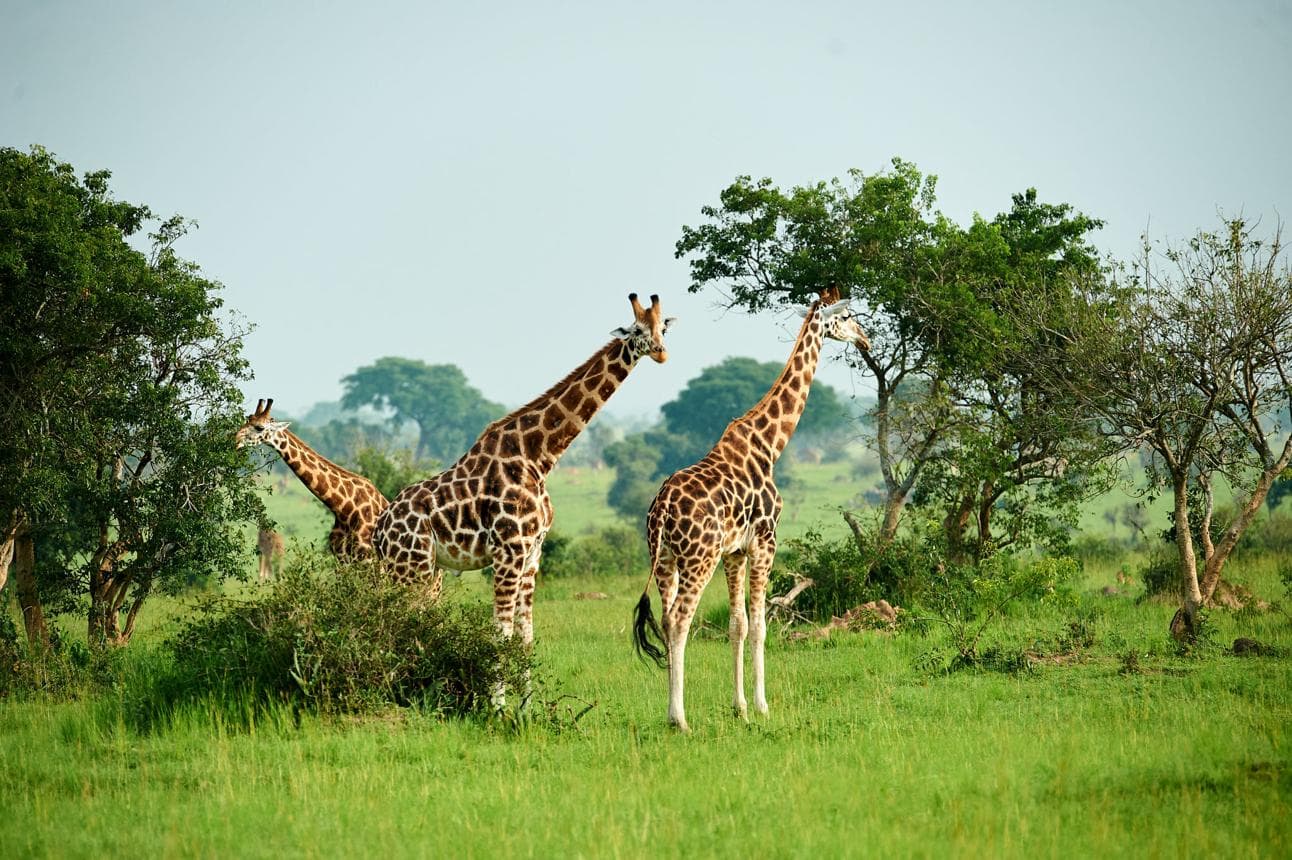
12 Nubian giraffes have been moved from Murchison Falls to Ajai Wildlife Reserve, bringing new hope for Uganda’s wildlife conservation and tourism future.
Giraffe Relocation Uganda 2026: What the Move from Murchison Falls to Ajai Means for Tourism
There is something strangely moving about watching a giraffe being loaded onto a truck.
The animal is enormous, almost impossibly so, yet the operation around it has to be careful and quiet. Rangers, veterinarians and wildlife officers work around its long legs and neck, checking equipment, monitoring its condition and preparing it for a journey it cannot understand.
That was the scene in Murchison Falls National Park in July 2026, as Uganda began one of its latest wildlife restoration efforts: moving endangered Nubian giraffes from Murchison Falls to Ajai Wildlife Reserve in West Nile.
The giraffe relocation Uganda 2026 operation was more than a transfer of animals. It was a statement about where Uganda wants its wildlife to be in the decades ahead, and where it wants travellers to go.
Twelve Nubian giraffes were ultimately moved about 106 kilometres from Murchison Falls National Park to Ajai Wildlife Reserve. The operation is intended to strengthen conservation, restore wildlife to a reserve that once lost almost everything to poaching and insecurity, and create new opportunities for tourism in northwestern Uganda.
For travellers planning a Uganda safari 2026, that makes Ajai worth watching.
What Happened in the Giraffe Relocation Uganda 2026 Operation?
The first three giraffes were translocated from Murchison Falls National Park to Ajai Wildlife Reserve on 21 July 2026, with the operation continuing until a total of 12 animals had been moved. Uganda Wildlife Authority veterinary teams and rangers handled the operation, using specialised transport and carefully managed immobilisation procedures to reduce stress and protect both the animals and people involved.
According to reporting from the field, the first truck carrying three giraffes left at around 11:15 a.m., accompanied by support vehicles on the journey towards Ajai in Madi-Okollo District.
The route itself was only about 106 kilometres — roughly 65 miles — but moving a giraffe is not remotely comparable to moving ordinary cargo.
Veterinarians have to account for the animal’s unusual physiology. Once immobilised, the giraffe has to be monitored closely, with its position and breathing carefully managed. During this particular operation, branches were placed in the transport crates so the animals could chew during the journey.
Eventually, the trucks reached Ajai. And with that, a species that had disappeared from the reserve for decades was back.
Why are giraffes being moved from Murchison Falls?
The simplest answer is conservation security.
The more complete answer is that Uganda does not want the future of the Nubian giraffe to depend too heavily on one landscape.
Murchison Falls remains an important habitat for the species. But the park is also experiencing increasing pressures from human activity, including oil and gas development, tourism infrastructure, climate-related pressures, bush encroachment and invasive species. UWA officials have explained that establishing another population elsewhere can reduce the risk if the existing habitat comes under increasing pressure.
So the Murchison Falls to Ajai giraffes operation is best understood as creating a second opportunity for the species, a new population that can grow independently of the original one.
That is the thinking behind a Nubian giraffe translocation in Uganda: don’t put all your conservation eggs in one basket.
Why the Nubian Giraffe Translocation in Uganda Matters
The Nubian giraffe is not simply another animal on a safari checklist.
It is one of the most threatened giraffe populations in Africa, and Uganda has an important role to play in its survival.
Ajai gives conservationists another landscape in which the species can establish itself.
That matters because healthy wildlife conservation is not only about protecting animals where they currently exist. It is also about restoring suitable habitats, rebuilding populations and giving species room to recover.
And Ajai has a particularly powerful story to tell.
Ajai Wildlife Reserve Giraffes Are Returning to a Landscape That Lost Its Wildlife
Ajai Wildlife Reserve was established in 1937 and later became a wildlife reserve. Historically, the area was associated with white rhinos and supported a much richer wildlife population than visitors might expect today.
Then came years of insecurity and poaching.
By the early 1980s, the reserve had lost its wildlife populations. Now, slowly, the story is changing.
Southern white rhinos have been reintroduced. Zebras, Uganda kobs and other wildlife are part of the wider restoration effort, while conservation authorities are strengthening protection and working with surrounding communities.
The giraffes are the latest chapter, and perhaps the most visible one.
Imagine a child growing up near Ajai today and seeing a giraffe walking through the reserve for the first time — an animal that their grandparents may have known only from stories, photographs or television.
That is what wildlife restoration can mean at its most human level. It is not simply putting animals back into a protected area, it is putting something back into people’s sense of place.
What Does Giraffe Translocation Mean for Uganda Tourism?
This is where the story becomes bigger than conservation.
Ask what does giraffe translocation mean for Uganda tourism, and the answer begins with one simple fact:
Wildlife gives people a reason to travel.
Giraffes are among Africa’s most recognisable animals. They photograph beautifully, are easy for first-time safari travellers to connect with and add another compelling species to an already developing wildlife experience.
For Ajai, that matters enormously. The reserve is no longer being presented simply as a place with potential. It is becoming part of a wider effort to rebuild a functioning wildlife destination in West Nile.
The combination of giraffes, rhinos, zebras, Uganda kobs, wetlands, savannah and the Albert Nile gives the region something increasingly important in tourism: variety. And variety can change an itinerary.
A traveller who might previously have thought of West Nile as somewhere to pass through can begin to see it as somewhere worth spending two or three days.
That means:
More demand for accommodation around the region.
More work for local guides, drivers and hospitality businesses.
Greater opportunities for restaurants, craft producers and community enterprises.
More incentive to invest in tourism infrastructure.
More conservation revenue when visitors spend money in the area.
More visibility for West Nile as a genuine safari destination.
This is why the giraffes matter to Uganda Tourism more than wildlife enthusiasts. They can help create an economic reason to protect the landscape.
New Tourism Destinations in Uganda 2026: Why Ajai Matters
Uganda’s best-known safari destinations are already familiar to international travellers.
Murchison Falls.
Queen Elizabeth.
Bwindi.
Kidepo Valley.
They deserve their reputation. But Uganda has never needed to be a one-route safari country.
The next stage of the country’s tourism story could be about connecting more of its landscapes and communities to the visitor economy.
That is where Ajai fits.
The reserve covers about 166 square kilometres and sits along the western side of the Albert Nile in northwestern Uganda.
Its location makes it particularly interesting for a broader West Nile itinerary — especially one that connects wildlife with the landscapes, communities and cultural experiences around Arua, Pakwach and the Albert Nile.
The new tourism destinations in Uganda 2026 will not necessarily be places that have never existed before.
Some, like Ajai, are places being given a second life. And that distinction matters.
The opportunity is not to turn Ajai into another crowded safari circuit. It is to develop it carefully while keeping the sense of wilderness that makes emerging destinations attractive in the first place.
West Nile Tourism 2026: Accessibility Will Matter as Much as Wildlife
A giraffe cannot build a tourism industry on its own, neither can a rhino.
For Ajai to fulfil its potential, travellers need to be able to reach it comfortably, safely and predictably. That means roads, signage, visitor facilities, accommodation, trained guides, communications and conservation infrastructure all have a role to play.
Local leaders have already raised road access as an important issue. During the 2026 rhino restoration programme, leaders in Madi-Okollo called for improved roads, including the proposed Wanseko–Panyimur–Pakwach–Rhino Camp–Obongi route, arguing that better connectivity would help tourism and investment reach the area.
That conversation is important because wildlife tourism tends to follow accessibility.
Build the road, improve the visitor experience, create a reason to stop — and suddenly a place that was once a detour becomes part of an itinerary.
For West Nile tourism 2026, Ajai could become one of those places.
What could Ajai offer travellers?
As restoration progresses, the potential tourism experience extends beyond simply looking for giraffes.
Visitors could experience wildlife viewing, birding, nature-based activities and community experiences, while the wider West Nile region adds cultural and Nile-related attractions to the journey. And the best part for many travellers may be the feeling of discovering somewhere before everyone else has arrived. That is increasingly rare.
How Ajai Could Change the Way People Plan a Uganda Safari
For a Ugandan family, Ajai could eventually offer another domestic safari option in a part of the country that deserves greater attention.
For regional travellers, it adds another wildlife stop without requiring the same itinerary as the classic southern Uganda circuit.
For international visitors, it could become a fascinating addition to a longer journey.
Imagine beginning in Kampala, continuing towards Murchison Falls, experiencing the Nile and savannah landscapes, then travelling towards West Nile to explore Ajai and the surrounding region.
From there, an itinerary could continue towards other parts of Uganda depending on the traveller’s interests.
For someone combining wildlife with primates, culture and landscapes, Ajai does not have to replace Uganda’s established destinations. It can complement them. That is the real opportunity.
Can Travellers Visit the Ajai Wildlife Reserve Giraffes Yet?
The giraffes have been released into Ajai, but travellers should understand that this is a developing conservation and tourism destination, not a fully mature safari product with guaranteed sightings.
The animals are newly introduced, meaning their behaviour, ranging patterns and adaptation to the reserve will continue to be monitored. So if seeing the relocated giraffes is the main reason for your trip, speak with your tour operator and confirm the latest visitor arrangements before travelling.
How Visiting Ajai Supports Conservation
There is a bigger connection between tourism and conservation here.
A protected area needs more than wildlife. It needs people who have a reason to protect it.
When visitors stay in local accommodation, hire local guides, buy locally made products, eat at local businesses and pay conservation-related fees, tourism creates an economic argument for keeping wildlife alive.
Uganda’s wildlife authorities also work through community participation and revenue-sharing approaches as part of conservation management. That means your safari can become part of a much larger chain.
A giraffe attracts the visitor. The visitor spends money. That spending supports businesses and conservation. Conservation makes the wildlife destination stronger.
A stronger destination attracts more visitors. And more visitors create greater incentive to protect the landscape. It is not automatic, and tourism must be managed responsibly. But when done well, this is one of the most powerful relationships in African conservation.
Everything Uganda is here to help you plan and book your perfect Uganda safari.
The most interesting Uganda trips are rarely the ones that simply string together famous names. They are the ones that make sense as a journey.
At Everything Uganda, we look beyond the checklist.
We understand that one traveller may want gorillas and giraffes. Another may care about wildlife, culture and photography. A Ugandan family may want a memorable domestic getaway without spending weeks on the road.
And as destinations such as Ajai develop, the ability to build an itinerary around what is actually happening on the ground becomes even more important.
We can help you plan a Uganda trip that combines established highlights such as Murchison Falls, Bwindi, Queen Elizabeth or Kidepo with emerging experiences in places such as West Nile.
That means thoughtful routing, well-paced days, carefully selected accommodation, trusted guides and drivers, and practical support before and throughout your journey.
Most importantly, we help you travel with context. You won’t just visit incredible places; you’ll understand them too. You’ll experience Uganda beyond the sights — its people, stories, culture and landscapes. Because seeing a giraffe is wonderful. But understanding the place it calls home makes the experience even more meaningful.
So, why not make 2026 the year you come to see Uganda for yourself?
Plan your Uganda adventure with Everything Uganda.
View & Book Our Uganda Safari Packages.