
World Tourism Day 2026 Uganda: What It Means for Uganda’s Tourism Industry
Ogundeyi Faith
Discover what World Tourism Day 2026 means for Uganda, from Mbale and Bugisu to Open Park Days, tourism growth and new ways to experience the country.
Late September will feel a little different in Mbale.
On the streets of the city, visitors will arrive from different parts of Uganda and beyond. Music will spill from event spaces. Dancers will perform in traditional dress. Tourism businesses will have their displays ready, guides will be telling stories about places many Ugandans have never visited, and somewhere in the crowd, someone will be seeing Mount Elgon properly for the first time.
A few hours away, another Ugandan family may be loading into a vehicle for a very different kind of day out: a drive into one of the country’s national parks during the Uganda Wildlife Authority’s Open Park Days.
This is the bigger story behind World Tourism Day 2026 Uganda.
It is not simply another date on the tourism calendar. It is an opportunity for Uganda to look at what it has, invite more people to experience it, and ask a more important question: how can tourism create lasting value for the people, communities and businesses that make these destinations what they are?
What Is World Tourism Day and Why Does It Matter to Uganda?
World Tourism Day is observed every year on 27 September. It is an international day recognising tourism’s economic, social and cultural importance and the role travel can play in connecting people and destinations.
The global 2026 theme is “Digital Agenda and Artificial Intelligence to redesign tourism.” The official global celebration is proposed to be hosted in El Salvador, with the theme examining how digital transformation and artificial intelligence could reshape visitor experiences, tourism operations and sustainable practices.
But countries do not have to wait until 27 September to participate.
In Uganda, World Tourism Day is becoming a wider period of tourism exhibitions, familiarisation trips, community activities, cultural showcases and destination promotion. In 2026, the national celebrations are being prepared for Mbale City in the Bugisu sub-region, giving Eastern Uganda an unusually large stage to tell its own tourism story.
So, if you have been searching for what is World Tourism Day Uganda, the simplest answer is this:
It is a global tourism observance that Uganda uses as an opportunity to promote its destinations, celebrate the people behind the tourism industry, encourage domestic travel and draw attention to areas with the potential to welcome more visitors.
And in 2026, that spotlight falls strongly on Bugisu.
World Tourism Day 2026 Uganda: Why Mbale and Bugisu Are in the Spotlight
There is something fitting about taking a national tourism celebration to Mbale.
For many international travellers, Uganda begins with a familiar list: gorillas, chimpanzees, savannah, elephants, Murchison Falls and Queen Elizabeth National Park.
But Bugisu tells another story.
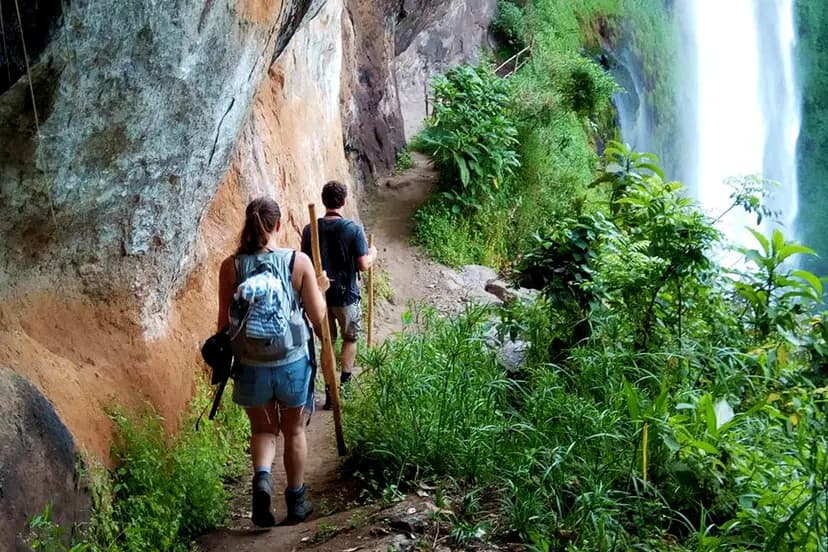
Here, the landscape rises towards Mount Elgon. Coffee grows on the mountain slopes. Waterfalls cut through the landscape. Wanale Ridge creates dramatic views over the plains below. Cultural traditions remain deeply connected to community life.
And there is Imbalu, one of the region’s most significant cultural traditions.
That combination is precisely what makes Bugisu interesting as a tourism destination. It does not ask travellers to choose between nature and culture. It puts both within the same journey.
The Bugisu Cultural Institution has also begun mapping and documenting tourism sites across the region, working with government and local stakeholders to identify, profile and promote attractions that many people—even residents—may not know exist. A Wanale Trekking Challenge is also planned as part of activities leading into the World Tourism Day celebrations.
That matters because tourism cannot grow around attractions that remain invisible.
Bugisu region tourism 2026 is therefore about more than hosting an event. It is about making the region easier to discover, easier to understand and, eventually, easier to include in a traveller’s Uganda itinerary.
Mount Elgon, Coffee and Culture: The Story Behind Bugisu
Imagine beginning the morning on the slopes of Mount Elgon.
The air is cooler. The landscape is green. A farmer is working among coffee plants while, somewhere nearby, a guide explains why this mountain means more to the communities around it than simply being a beautiful backdrop.
Later, you could be standing at a cultural site, walking through a village or following a trail towards a waterfall.
That is the kind of experience Uganda increasingly needs to sell.
Not simply, “Come and see our attractions.” But, “Come and understand why these places matter.”
The Bugisu cultural institution’s ongoing tourism-site mapping is part of that broader effort. Local leaders have argued that properly identifying, documenting and promoting these attractions can strengthen domestic tourism and create more opportunities for communities.
For international visitors, it also creates another reason to travel beyond the traditional safari circuit.
A traveller who comes to Uganda for wildlife can add Mount Elgon and Bugisu cultural tourism to the itinerary and leave with a much broader understanding of the country.
Uganda Open Park Days 2026: When the National Parks Open Their Gates
For three days in September, visiting one of Uganda’s national parks will come with an unusual incentive: no park entrance fee for eligible visitors at participating sites.
From 25–27 September 2026, Uganda Wildlife Authority (UWA) is opening selected national parks and wildlife reserves as part of its Open Park Days 2026 initiative, timed to coincide with the country’s World Tourism Day celebrations.
The idea is simple: make it easier for more Ugandans and regional visitors to experience the country’s wildlife for themselves.
For someone who has never stood close enough to a savannah to watch an elephant cross the road, or spent a morning scanning the grasslands for a lion, this could be the push that turns “one day” into an actual safari.
The initiative is also about more than a free entrance ticket. By encouraging domestic and regional travel, UWA hopes to deepen appreciation for Uganda’s protected areas and the conservation work that keeps them alive.
It is worth knowing, however, that free park entry does not mean the entire trip is free. Transport, accommodation, meals, guides and optional activities may still come at a cost. Travellers should also confirm the latest UWA guidance on participating parks, eligibility and any applicable conditions before travelling.
Should International Travellers Visit During Open Park Days?
They can, but there is a practical consideration.
Popular parks may be busier during the 25–27 September period because of the increased interest. For some travellers, that is part of the excitement. For others, travelling immediately before or after the main dates may offer a quieter experience.
If your priority is wildlife photography, tranquillity or a slower safari pace, itinerary timing matters.
If your priority is being part of a major national tourism moment, the Open Park Days period could be particularly memorable.
View our Uganda Experience Packages here.
What World Tourism Day 2026 Means for Uganda’s Tourism Industry
Uganda is trying to turn tourism into a stronger economic engine, and the numbers explain why.
Uganda’s National Tourism Policy 2025 targets US$4 billion in annual tourism earnings and 2.4 million annual international visitors within five years. The policy also calls for greater diversification into areas such as cultural tourism, MICE tourism and other experiences beyond the country’s traditional wildlife offering.
Tourism already has significant economic weight. Government figures cited in recent reporting show tourism earnings reaching about US$1.52 billion in the 12 months to March 2025, alongside growth in international arrivals and domestic visits to national parks.
The 2026/27 national budget also allocates UGX 571.5 billion to tourism development, including tourism-site infrastructure and global promotion. That creates a much bigger opportunity.
For Tourism Businesses
World Tourism Day gives hotels, tour operators, guides, restaurants, transport companies, craft businesses and attractions a reason to put their products in front of new audiences.
But visibility alone is not enough.
A business can use the period to:
Create domestic or regional travel packages.
Develop cultural experiences with local communities.
Introduce new Mount Elgon or Bugisu itineraries.
Partner with accommodation providers and guides.
Promote conservation-focused experiences.
Improve service standards and digital booking systems.
Reach international travellers through stronger destination storytelling.
This is also where the 2026 global theme becomes relevant.
If artificial intelligence and digital tools are reshaping tourism, Ugandan businesses need to think beyond posting beautiful photographs. Better websites, easier enquiries, digital itineraries, faster communication and smarter customer service can make the difference between someone admiring Uganda online and actually booking a flight.
For Communities
Tourism works best when the people who live around attractions have a reason to care about their preservation.
A cultural site that attracts visitors can create work for guides, performers, artisans, drivers, restaurants and accommodation providers.
A trekking route can support local guides.
A coffee experience can connect farmers with visitors.
A national park can support surrounding communities through tourism-related employment and enterprise.
That is the promise behind taking tourism promotion into places such as Bugisu rather than concentrating every visitor around the same handful of destinations.
For Uganda’s Global Image
Perhaps the biggest opportunity is changing the way people imagine Uganda.
Uganda is not only gorilla trekking, or only a safari destination. It is mountains, lakes, forests, rivers, food, music, history, coffee, communities and cities.
World Tourism Day gives Uganda another chance to tell that fuller story.
How Tourism Businesses Can Benefit From World Tourism Day Uganda
For businesses wondering how tourism businesses can benefit from World Tourism Day Uganda, the answer is to treat it as a commercial opportunity as well as a celebration.
Start with the experience.
What can a visitor do that they cannot easily find elsewhere?
A hotel could collaborate with a local guide on a cultural walking experience. A tour operator could package Mount Elgon with a safari. A restaurant could showcase regional cuisine. A craft business could organise an experience that lets visitors meet the makers rather than simply purchase souvenirs.
The strongest products are usually not built in isolation, they are built through partnerships.
For smaller tourism businesses, partnering with an established operator can also provide access to wider markets, better itinerary planning and international customers who may not discover a local experience on their own.
How Travellers Can Participate in World Tourism Week Uganda
You do not have to be a tourism professional to take part.
If you are Ugandan or eligible under the relevant UWA Open Park Days arrangements, consider planning a national park visit between 25 and 27 September 2026, after confirming the latest participation details with Uganda Wildlife Authority.
If you are visiting from abroad, consider building your trip around the wider celebrations rather than treating World Tourism Day as a single event.
You could:
Visit Mbale City and Bugisu.
Explore Mount Elgon and nearby cultural attractions.
Attend relevant cultural and tourism events.
Add a Uganda safari to your itinerary.
Hire local guides where appropriate.
Choose accommodation and tour companies that take conservation and community benefit seriously.
And perhaps most importantly, stay long enough to see more than one side of the country.
A Uganda trip that combines Bugisu with a national park is already more revealing than an itinerary that rushes from one wildlife sighting to another.
For international travellers wondering about the best time to visit Uganda in 2026, September is particularly attractive for combining the country’s tourism calendar with generally favourable conditions for many safari and trekking experiences. But Uganda remains a year-round destination, and the ideal timing depends on exactly what you want to see and do.
Planning a Uganda Safari Around World Tourism Day 2026
A good safari is rarely about squeezing the most destinations into the fewest days. It is about getting the rhythm right.
You might begin in Entebbe, travel east towards Mbale and spend time exploring Bugisu and Mount Elgon, then continue west for wildlife. Or you could build a classic Uganda safari around Queen Elizabeth or Murchison Falls and add a cultural experience along the way.
For gorilla trekking, the itinerary needs a different pace altogether. The point is that Uganda safari 2026 should not be treated as one fixed product.
Your route should reflect your interests, available time, budget and preferred travel style.
View our Uganda Experience Packages here.
Why Travel Uganda With Everything Uganda?
There is a difference between knowing the names of Uganda’s attractions and knowing how they fit together.
At Everything Uganda, the goal is to help travellers experience the country as a whole.
That can mean combining Bugisu and Mount Elgon with wildlife, adding cultural experiences to a safari, choosing lodges that make sense for your route, or simply building an itinerary that does not leave you spending half the holiday sitting in a vehicle.
Our local knowledge covers destinations including Murchison Falls, Queen Elizabeth, Bwindi and Kidepo, as well as less familiar corners of Uganda. View our safari packages here.
We work with experienced guides, drivers and accommodation partners to build journeys around the traveller, not around a generic itinerary.
And if you’re travelling to Uganda specifically for World Tourism Day 2026, we can help you plan around the September celebrations, Open Park Days and relevant cultural activities, while still keeping the rest of your trip practical and enjoyable.
Because the best Uganda trip isn’t necessarily the one with the longest checklist. It’s the one you come home from with stories you’ll still be telling years later.
Let Everything Uganda help you plan a trip worth remembering: send us a message here reservations@everythinguganda.com