
Why Eastern Uganda Should Be on Your Uganda Travel List in 2026
Ogundeyi Faith
Discover Eastern Uganda beyond Sipi Falls, from Mount Elgon and coffee farms to waterfalls, culture and unforgettable community experiences.
Why Eastern Uganda Should Be on Your Uganda Travel List in 2026
If you’ve already heard about Uganda’s gorillas, chimpanzees and famous safaris, there’s another side of the country you may not have considered.
Eastern Uganda.
And in 2026, it deserves a closer look.
This September, Uganda’s Tourism Month is putting Eastern Uganda firmly in the spotlight. The country’s World Tourism Day celebrations will take place in Mbale on 27 September, followed by an Explore Eastern Uganda campaign from 28 to 30 September.
But you don’t need a tourism campaign as a reason to visit.
Eastern Uganda gives you something different: a chance to experience Uganda through mountains, waterfalls, coffee farms, local communities and culture, often within the same journey.
If your idea of travel is more than ticking famous attractions off a list, this is a region worth adding to your itinerary.
So, why should you visit Eastern Uganda?
Let’s start with the obvious question.
If you’re already travelling to Uganda, why spend time going east?
Because Eastern Uganda gives you a different way of understanding the country.
You can wake up in the mountains around Sipi, walk through coffee-growing communities, follow a local guide along waterfall trails and spend time learning about the people whose lives are connected to Mount Elgon.
The region isn’t built around one single attraction.
It’s the combination that makes it interesting.
And that matters if you’re the kind of traveller who would rather understand a place than simply photograph it.
1. Mount Elgon gives you a completely different side of Uganda
Mount Elgon sits on Uganda’s eastern border with Kenya and rises to 4,321 metres at Wagagai Peak. The mountain is protected within Mount Elgon National Park, whose landscapes range from forest to higher-altitude moorland.
You don’t have to be an experienced mountaineer to visit.
The Mount Elgon area offers shorter forest walks and hikes as well as longer trekking routes for people who want to go deeper into the mountain.
The full mountain trek is a serious undertaking, but Eastern Uganda doesn’t require you to commit to a multi-day expedition to appreciate Elgon.
You can simply explore the lower slopes, walk through the surrounding communities, visit waterfalls and experience the landscape at a much gentler pace.
That flexibility is one of the region’s strengths.
2. Sipi Falls is more than a waterfall photo
Sipi Falls is probably the most recognisable attraction in this part of Uganda.
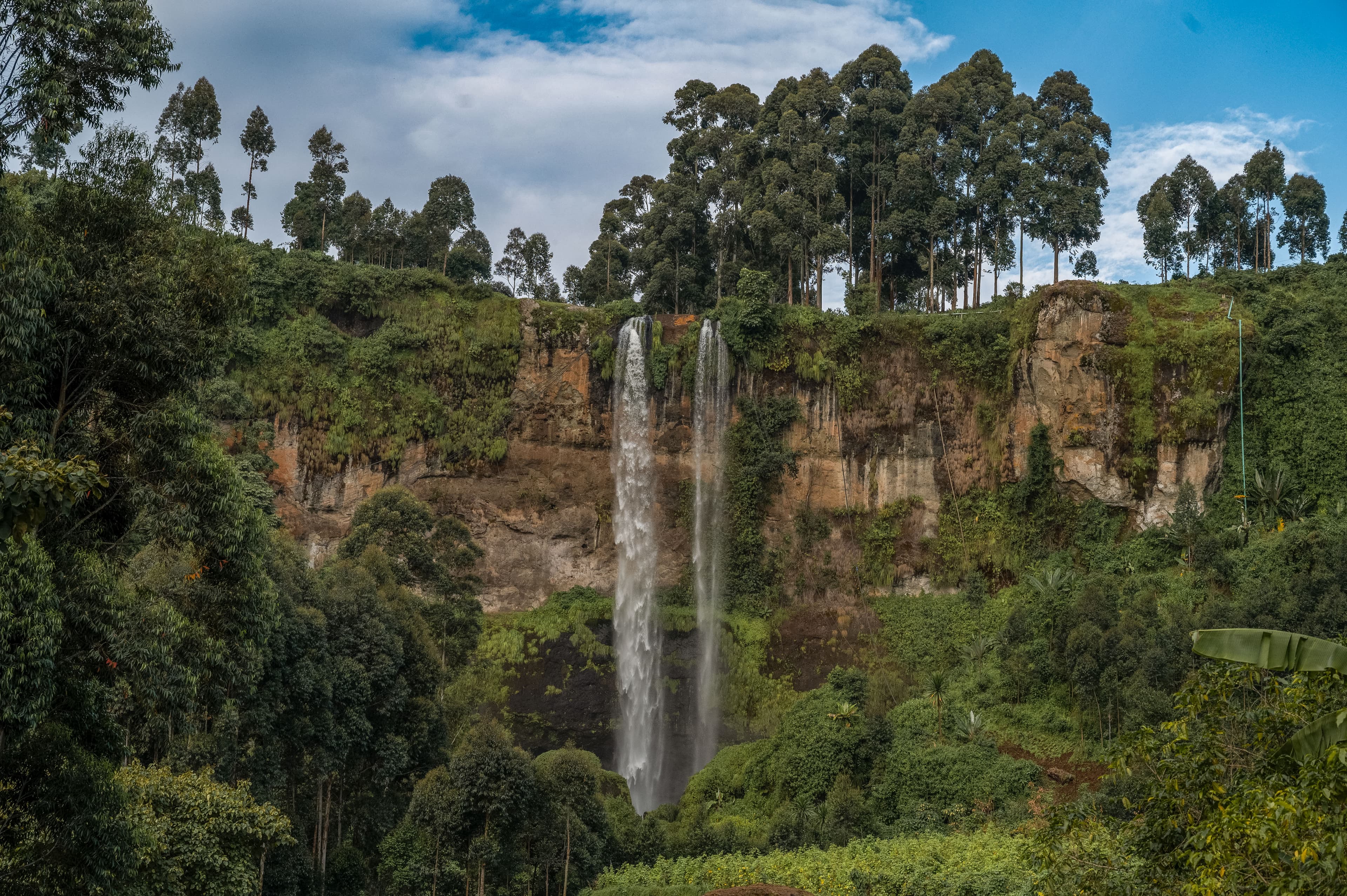
It is actually a series of three waterfalls on the slopes of Mount Elgon, near Kapchorwa. The surrounding area is also a starting point for hikes towards Mount Elgon.
But here’s what makes a visit more interesting than simply driving up to take a photograph.
You can walk between the falls. You can explore the surrounding hills and villages. You can take part in a coffee experience.
And, for travellers looking for something more adventurous, activities around Sipi include abseiling and rock climbing. The terrain also matters.
This isn’t a polished city attraction where you step out of a vehicle and walk a few metres to a viewpoint. Some walks around the falls involve uneven, sloping ground, so comfortable walking shoes are worth bringing.
If you’re planning to hike, expect the weather to change and prepare accordingly.
3. You can drink coffee where it grows
This might be one of the best reasons to put Eastern Uganda on your list.
Mount Elgon is one of Uganda’s important Arabica coffee-growing regions. The Uganda Coffee Development Authority identifies Mt Elgon and the eastern highlands as major Arabica-growing areas, including Bugisu Arabica.
But the interesting part for a traveller isn’t simply knowing where the coffee comes from.
It’s seeing the process.
Around Sipi, coffee experiences can take you into farming communities to learn how coffee is grown, harvested and processed before eventually becoming the drink in your cup.
That changes the way you think about your morning coffee.
You’re no longer just drinking Ugandan coffee. You’ve seen the landscape it came from. You’ve walked through the farms. You’ve met people involved in producing it.
And suddenly, the cup in front of you has a story.
That’s the kind of travel experience Eastern Uganda does particularly well.
4. Eastern Uganda lets you experience culture as part of the journey
Eastern Uganda isn’t simply a landscape.
It’s home to communities with their own languages, traditions, food, music and cultural practices.
Around Mount Elgon, the Bagisu and Sabiny are among the communities connected to the mountain and its surrounding areas.
The wider region also has a strong cultural identity, including the traditions of the Bagisu/Bamasaba around Mbale and the surrounding districts.
For a traveller, the important thing is how you experience this culture.
The best experiences aren’t about watching people from a distance.
They’re about being welcomed into a community setting, learning why a tradition matters, tasting local food, listening to stories and understanding how culture connects to everyday life.
That is also why community tourism matters here.
Tourism can create opportunities beyond hotels and major attractions, allowing guides, farmers, craftspeople, performers and local businesses to benefit from visitors.
And that makes your trip feel different too.
You aren’t simply passing through a destination. You’re spending part of your travel budget within it.
5. Mbale makes a useful starting point
If you’re heading towards Mount Elgon and Sipi Falls, Mbale is one of the most useful places to orient yourself.
The city sits below Mount Elgon and provides access to several attractions in the surrounding region.
It’s also particularly relevant in 2026 because Mbale will host Uganda’s national World Tourism Day celebrations on 27 September. The wider programme is intended to put greater attention on Eastern Uganda’s tourism economy, including culture, coffee, adventure and community tourism.
That makes September an interesting time to visit if you want to see the region during a period when tourism, culture and local businesses are receiving additional attention.
But even outside September, Mbale works well as part of a wider Eastern Uganda itinerary.
6. It works particularly well for travellers who don’t want a rushed safari
There’s nothing wrong with a classic Ugandan safari, but not every traveller wants every day to revolve around game drives.
Eastern Uganda offers a different rhythm.
You can spend a morning walking. An afternoon learning about coffee. Another day exploring waterfalls.
Then slow down over a meal or spend time talking to people in the community.
For couples, solo travellers and people who enjoy active holidays without wanting a full expedition, that combination can work particularly well.
It also makes Eastern Uganda a useful addition to a longer Uganda trip.
You could combine Jinja, Mbale, Sipi Falls and Mount Elgon rather than treating each destination as a completely separate trip.
Everything Uganda’s existing Uganda travel guide, for example, already connects Jinja with the journey towards Mbale and Sipi.
Everything Uganda’s Jinja guide.
When should you visit Eastern Uganda?
There isn’t one single month that makes Eastern Uganda worth visiting.
Your ideal timing depends on what you want to do.
If hiking is your priority, the drier periods can make trekking more comfortable. UWA’s Mount Elgon information identifies June–August and December–March as the more enjoyable dry-season periods for climbing, although the mountain can be climbed throughout the year.
If seeing Sipi Falls with more water is important to you, wetter periods can make the waterfalls more dramatic, although rain can also make trails wetter and more slippery.
And if you want to experience the energy around Uganda’s 2026 Tourism Month, September is particularly timely, with World Tourism Day in Mbale on 27 September and the Explore Eastern Uganda campaign following immediately afterwards.
In other words, don’t choose your dates based on a generic “best time to visit Uganda” answer alone.
Choose them around the experience you actually want.
How do you get to Eastern Uganda?
For most international visitors, the journey begins in Kampala or at Entebbe International Airport.
From Kampala, you travel east towards Jinja and then onwards towards Mbale and the Mount Elgon region.
Sipi Falls is further north of Mbale, towards Kapchorwa.
UWA places Mount Elgon National Park about 235 km east of Kampala, with the road continuing towards Kapchorwa and smaller roads leading towards different trailheads.
For an international traveller, this is one reason a planned itinerary can make sense.
Rather than figuring out every transfer yourself, you can build Eastern Uganda into a wider journey that connects destinations naturally.
Who should put Eastern Uganda on their list?
Eastern Uganda is particularly suited to travellers who enjoy:
Hiking and active travel
Coffee and food experiences
Cultural tourism
Community-based experiences
Waterfalls and mountain scenery
Photography
Slower, less rushed travel
Combining adventure with local interaction
It may be less suitable if your only goal is a traditional Big Five safari, because Eastern Uganda isn’t trying to replace Uganda’s famous wildlife destinations.
It adds another dimension to the country.
The real reason to visit Eastern Uganda in 2026
The biggest mistake would be treating Eastern Uganda as simply “the place where Sipi Falls is”.
It is much more interesting than that. Just take a moment to think about the journey.
You arrive in Mbale. The landscape begins to rise. You move towards Mount Elgon. Coffee grows around you.
Then you hear the water before you see the falls.
You walk through communities where farming and mountain life are part of the everyday landscape.
You learn something about the people who call this place home. And somewhere along the way, Uganda stops being a collection of tourist attractions.
It starts making sense as a place.
That is the memorable idea we want you to leave with: Eastern Uganda isn’t one attraction. It’s a way of experiencing several sides of Uganda in one journey.
Ready to explore Eastern Uganda?
If you’ve already seen gorilla trekking and safari on your Uganda wish list, consider giving the east a place on it too.
Everything Uganda can help you build an Eastern Uganda experience around Mbale, Mount Elgon, Sipi Falls, coffee, culture and adventure, depending on how you want to travel.
You don’t have to know exactly what your itinerary should look like.
Tell us what kind of Uganda trip you’re imagining, how much time you have and what you want to experience. We’ll help you find the right way to explore it.
Explore Everything Uganda’s Eastern Uganda experiences