
My First Realisation About Uganda Is Not What You Think
Ogundeyi Faith
My First Realisation About Uganda Is Not What You Think
If you are thinking about visiting Uganda from the UK, stop — nothing you have read has prepared you for what the first realisation actually is.
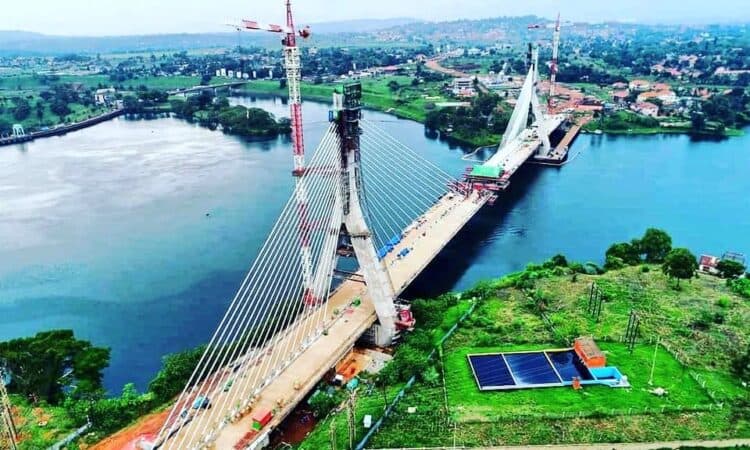
You land, and the first thing you see isn’t a city. It’s water.
A vast, quiet stretch that seems to blur into the horizon without apology. That is Lake Victoria — the second-largest freshwater lake in the world and the source of the longest river on Earth, the Nile.
That single view; water, silence, and an open horizon — is already far from what most people from the UK picture when thinking about travel to Uganda, and even I didn’t picture it that way at first.
Because at that moment, the question stops being whether Uganda is safe to visit.
The real question becomes whether you are ready for what Uganda actually is.
That is the first realization. And it is not what you think.
Where your journey begins
The moment you land at Entebbe International Airport, you’re already at the edge of Lake Victoria.
Kampala, the Capital is roughly 40km away — a 30-minute drive via the Entebbe Expressway.
Within 5–8 km of leaving the airport, the environment shifts into quieter, less structured spaces. Two places sit along this stretch: Mabamba Swamp and the Uganda Wildlife Conservation Education Centre (UWEC).
Mabamba Swamp is home to over 1,000 species of birds, including the shoebill stork that UK travellers often read about — a prehistoric-looking bird so imposing that you cannot win a staring contest with it.
A short distance away, UWEC offers a more structured way to engage with wildlife. It hosts the Big 5, chimpanzees, giraffes, Nile crocodiles, giant African pythons, and over a dozen species rarely seen outside Africa.
What stands out at this stage isn’t spectacle, but proximity. Within 40 minutes of landing, you’re already encountering landscapes, ecosystems, and wildlife that would normally require separate journeys elsewhere.
So — is Uganda safe to visit?
For many UK travellers, this is one of the first questions that comes up — and it often arrives alongside a specific image: Forest Whitaker as President Idi Amin Dada in The Last King of Scotland. The film is compelling. The history is real. But the Uganda of 1971 to 1979 is not the Uganda you will land in today.
The UK Foreign, Commonwealth & Development Office (FCDO) advises standard travel precautions — not avoidance. Uganda is generally safe, welcoming, and accessible for international visitors.
Streets remain active late into the night — people moving, trading, socialising. English is spoken widely, conversations flow easily, and the overall tone is open and welcoming.
As with any city: use taxis after dark, stick to busy areas, and avoid isolated walks at night.
There are also basic health requirements to note. A yellow fever vaccination certificate is required for entry. Malaria is present, so precautions are recommended — speak to a travel health professional before travelling.
Winston Churchill called it the Pearl of Africa — and he wasn’t wrong
Winston Churchill called Uganda “the Pearl of Africa,” and the description still holds.
Uganda sits in a rare balance. Temperatures remain between 20°C and 27°C throughout the year. There’s no snow or extremes, just a steady rhythm of dry and wet seasons that keep the landscape consistently green.
Uganda is one of only 13 countries in the world crossed by the Equator; a line you can physically stand on.
Lake Victoria, the Nile, and the most powerful waterfall in Africa
Uganda doesn’t rely on one landmark. It layers them.
Lake Victoria sits wide and still — the 2nd largest freshwater lake in the world, stretching across East Africa.
From here begins the Nile River; the longest river in the world, running over 4,132 miles, compared to the Amazon’s 4,000 miles.
At Murchison Falls; the most powerful waterfall in Africa, the river compresses. Forced through a narrow gap, it drops 43–45 metres. The pressure is so extreme it creates permanent mist and a thunderous roar that hits you before you see it. It’s not just a view — it’s something you register physically.
On a single boat sail, elephants, hippos, crocodiles, giraffes, and primates are all within view — wildlife that elsewhere would take separate trips to find.
Further east, Jinja shifts the tone entirely. Known as East Africa’s adventure capital, it sits where the Nile stops being quiet — fast, loud, and unpredictable. White-water rafting, kayaking, river surfing, fishing, bungee jumping. The river here doesn’t ask you to watch it. It pulls you in.
Not distance, but how much exists within reach, all of it held together by one river.
The primate capital of the world — no, really
Uganda is the primate capital of the entire world.
It holds the largest population of mountain gorillas on the planet, an endangered species found in Bwindi Impenetrable Forest and Mgahinga Gorilla National Park.
Gorilla trekking here costs significantly less; around £540–£630 — a fraction of what you’ll pay in neighbouring Rwanda or the DRC, making Uganda the accessible gateway to one of the most profound wildlife encounters on Earth.
Kibale National Park is one of the world’s best places for chimpanzee tracking — fast-moving, vocal, and impossible to ignore.
Uganda also boasts over 10 national parks, the Big 5 — lion, elephant, buffalo, leopard, and rhino — alongside more than 1,000 species of birds.
The Mountains of the Moon: snow in Africa
The Rwenzori Mountains challenge everything you thought you knew about Africa.
Snow-capped peaks. Glaciers. Cold air at altitude.
Known as the Mountains of the Moon and also one of the filming locations for Wakanda in 2018, this range rises to 5,109 metres at Margherita Peak, where ice and rock sit high above the equator.
From these heights, meltwater feeds the rivers and plains below, supporting surrounding communities.
Six major peaks offer distinct trekking routes across the range. Every 22nd of August, the Tusker Lite Rwenzori Marathon — now a World Athletics Label Road Race and Uganda’s first internationally certified marathon — brings runners from around the world into this high-altitude environment. It’s the same terrain that shaped Joshua Cheptegei, world record holder and one of the greatest long-distance runners alive.
This is where Uganda shifts again. Not just warm or just green. But cold, elevated, and unexpected; a place where glaciers exist, rivers are born, and the landscape feels entirely removed from what you expect of the continent.
The lake that starred in Wakanda — and the salt mined for 700 years
Lake Bunyonyi sits quietly in southwestern Uganda near the Rwandan border — known locally as the “Place of Many Little Birds.”
Ringed by 29 islands and terraced hillsides, it’s Africa’s second-deepest lake, and one of the most bilharzia-free bodies of water in the region, making it a popular place for canoeing, birdwatching, and slowing down after gorilla trekking.
This landscape also made its way onto the screen. Scenes from Wakanda were filmed in Uganda in 2018, drawing from places like this that feel both remote and visually striking.
Further within Queen Elizabeth National Park, named after Queen Elizabeth II in 1954 — sits Lake Katwe; a very salty crater lake. Here, salt has been mined for more than 700 years. Locals still harvest it using traditional evaporation methods, drawing saline water into shallow pans and allowing the sun to do the work. It’s not preserved as a display, but part of daily life.
Kampala — not the city UK readers picture
Kampala sits about 40km from Entebbe International Airport; roughly a 30-minute drive, but the shift is immediate.
Uganda’s national and commercial capital rests on the shores of Lake Victoria, built across a series of hills where red-tile villas and trees surround an urban centre of contemporary skyscrapers.
At its core is the Buganda Kingdom — over 50 clans, traditional instruments, food, and cultural sites, once a British protectorate, still deeply present in how the city moves. And Buganda is just one thread. Uganda carries over 50 distinct ethnic groups, each with its own language and identity, all woven into a single country.
Across the city, that history shows itself in fragments. At the Kasubi Tombs — the burial site of the Kings of Buganda — tradition becomes visible. At the Uganda Museum, instruments, artefacts, and stories trace the depth of Uganda culture across its many clans, languages, and identities.
Then night comes and the pace doesn’t drop.
Kampala runs 24/7. Not just weekends. Every day. By midnight, the city is still moving. By 2am, food is still being served, music is still playing; a mix of Afrobeat, dancehall, and international sounds. Alcohol and entry fees sit far below UK prices, and the energy doesn’t taper off until sunrise.
Parts of the city have even shaped how Uganda is seen globally. A neighbourhood in Kampala made it to Hollywood — Queen of Katwe, the Disney film starring Lupita Nyong'o, telling the true story of local chess champion Phiona Mutesi.
This is Uganda culture, not what you expected, and nothing like you imagined.
The Uganda Rolex: the street food that will ruin all other street food for you
The Uganda Rolex has nothing to do with watches. It's a chapati wrapped around fried eggs — made street-side, in front of you, for next to nothing. One bite and you'll understand why it’s so widely loved.
When is the best time to visit Uganda from the UK?
Uganda has two dry seasons — June to September and December to February — widely considered the best time for wildlife viewing and gorilla trekking. But the climate stays warm year-round at 20–27°C, and the wet seasons bring greener landscapes and fewer crowds. There's no bad time to visit.
The punchline
The first realisation about Uganda is not that it is different from what you feared. It is better than anything you imagined.
When you visit Uganda, you will not want to go back to the UK.