
Uganda Still Has Kings — Five Kingdoms Still Rule
Ogundeyi Faith
Uganda Still Has Kings. Here Is What That Actually Means in 2026.
Uganda has five kings. Not historical kings. Not ceremonial figureheads in museums. Real kings — with parliaments, prime ministers, and millions of people who still call them by their royal titles every single day.
The UK has one monarch. Uganda has five. And most of the world has never heard of any of them.
This isn’t ancient Uganda history tucked into textbooks. This is present-day Kampala; traffic outside, boda bodas weaving through, and inside palace grounds, a king holding court.
It sounds unreal at first, until you see it for yourself.
This is the kind of realization that usually hits people later, not before they arrive in Uganda.
How does a country have kings and a president at the same time?
So how does this actually work? How can a country have kings and still be run by a president?
Uganda is a republic, led by a president. But its kingdoms exist alongside the state, not as political rulers, but as deeply rooted cultural institutions that people still live by every day.
In 1966, The kingdoms were abolished by Prime Minister Milton Obote who sent troops to attack the Buganda royal palace. The Kabaka fled into exile in Britain. For nearly three decades, the kingdoms went quiet, not erased, but suspended.
Then in 1993, under President Yoweri Museveni, they were restored. Not as political powers, but as recognised custodians of identity, language, and heritage.
If you’re in the UK, the closest parallel is this: the Church of England operates alongside the UK government. Different authority. Different functions. Same country.
That’s how Uganda works.
And once you understand that, the real story begins.
The five kingdoms — and what makes each one extraordinary
There are five traditional kingdoms in Uganda. Each one feels like its own world.
Buganda — the one that runs like a government:
This is the largest and most influential of the Uganda kingdoms, and it doesn’t behave like a relic. It behaves like a system.
The Buganda Kingdom has around 14 million subjects — roughly 27% of Uganda’s population. It has a parliament (Lukiiko), a prime minister (Katikkiro), 18 counties, and a full administrative structure.
At the centre of it all is the Kabaka Ronald Muwenda Mutebi II — the 36th king in a lineage stretching back to the 13th century.
His story alone carries the weight of a novel. His father fled in 1966 when the palace was attacked, but in 1993, he returned to be crowned. The kingdom resumed, as if history had paused and then pressed play again.
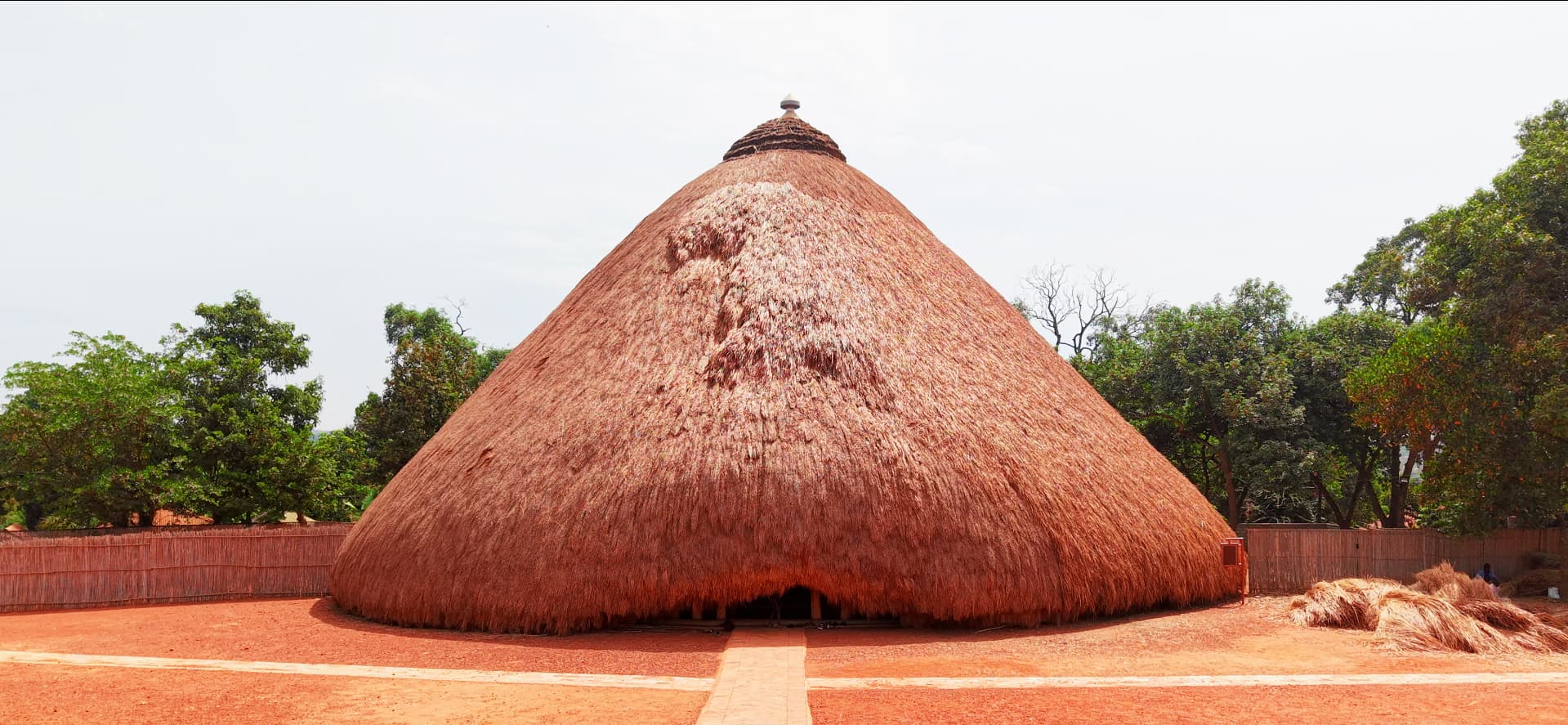
In Kampala, you can stand at Lubiri Palace — the Kabaka’s official residence, and feel that continuity. A short distance away are the Kasubi Tombs, a UNESCO World Heritage Site where four kabakas are buried.
But “buried” isn’t quite the word. In Buganda culture, a king does not die. He gets lost in the forest.
Bunyoro-Kitara — the ancient empire that the British feared:
Before Buganda rose, Bunyoro-Kitara was the dominant power in the region. This was the empire others measured themselves against.
Its most famous king, Kabalega, resisted British colonisation fiercely. He was eventually captured and exiled to the Seychelles — but not before leaving a legacy of defiance that still shapes how the Banyoro see themselves as people of the empire.
Today, King Omukama Solomon Iguru I leads the kingdom.
Within its historical territory sits Murchison Falls National Park; a place most visitors associate with wildlife and the Nile, rarely realising they’re standing inside what was once one of East Africa’s most powerful kingdoms.
The pride here isn’t performative. It’s inherited.
Toro — the kingdom with the youngest king in the world:
In 1995, something happened that sounds almost impossible. A three-year-old boy was crowned king. One of the youngest monarchs in world history.
His name is Oyo Nyimba Kabamba Iguru Rukidi IV.
He is now in his early 30s, and in a strange way, he has never known life outside the throne. He has been king for as long as he can remember.
That detail changes how you see it. Because this isn’t about memory or nostalgia. It’s about a system that keeps moving, even when life doesn’t follow a typical script.
Toro sits in western Uganda, near the Rwenzori Mountains — often called the Mountains of the Moon. The landscape feels cinematic, almost unreal at times. The story behind it carries the same weight.
Ankole — the kingdom without a king:
This is where the pattern breaks a little.
Ankole was not formally restored in 1993, which means something unusual in this story: there is no officially recognised king.
Among the Banyankole, that absence is still talked about. Some believe the kingdom should return in full. Others don’t see the need for it anymore. The conversation hasn’t really settled, it just continues in the background of everyday life.
But here’s what never disappeared: identity.
You see it most clearly in the long-horned Ankole cattle; elegant, striking, almost sculptural, one of East Africa’s most recognisable symbols.
There’s something interesting about it. A kingdom that isn’t defined by a throne, but by what it chose not to rebuild. It still exists in memory, debate, and culture, just without a crown sitting in the middle of it.
And maybe that’s the part you keep thinking about long after you’ve heard it.
Busoga — the eastern kingdom
In eastern Uganda, between Lake Victoria and Lake Kyoga, lies Busoga. It’s a place shaped by water, farming life, and long-standing tradition.
The ruler carries a title that often stands out the first time you hear it: Kyabazinga. It simply means king or supreme ruler in Lusoga.
Today, that role is held by Kyabazinga William Gabula Nadiope IV. He leads a kingdom that sits a little apart from the others in this story, less globally known, but firmly rooted in everyday life here.
Busoga has its own rhythm, its own cultural voice, and its own way of holding identity together.
It’s another reminder that Uganda isn’t a single story. It’s several, existing side by side.
Can you actually visit?
If you’ve been searching for things to see in Kampala, this is where the list shifts from typical to unexpected.
Yes — you can visit these places. But they’re not theme parks. They’re living cultural institutions.
Start with Lubiri Palace in Mengo — the official residence of the Kabaka. Then move to the Kasubi Tombs, a UNESCO World Heritage Site where the atmosphere changes the moment you step inside.
There’s also Naggalabi Buddo, the coronation site where Buganda kings are traditionally crowned, and the Ndere Cultural Centre, where music, dance, and storytelling bring Uganda culture to life every Wednesday and Friday evening.
Outside the capital, you’ll find the Bunyoro-Kitara Palace in Hoima and the Toro Kingdom Palace in Fort Portal, set against the Rwenzori Mountains.
These are not theme parks for visitors. They are living cultural institutions. Approach them with respect and genuine curiosity and you’ll see a side of Uganda no safari really prepares you for.
If your curiosity is already shifting toward planning, that next step is here.
You came to Uganda for the gorillas. For the Nile. For the falls. You did not expect to find five kingdoms still standing. That is exactly the point.