
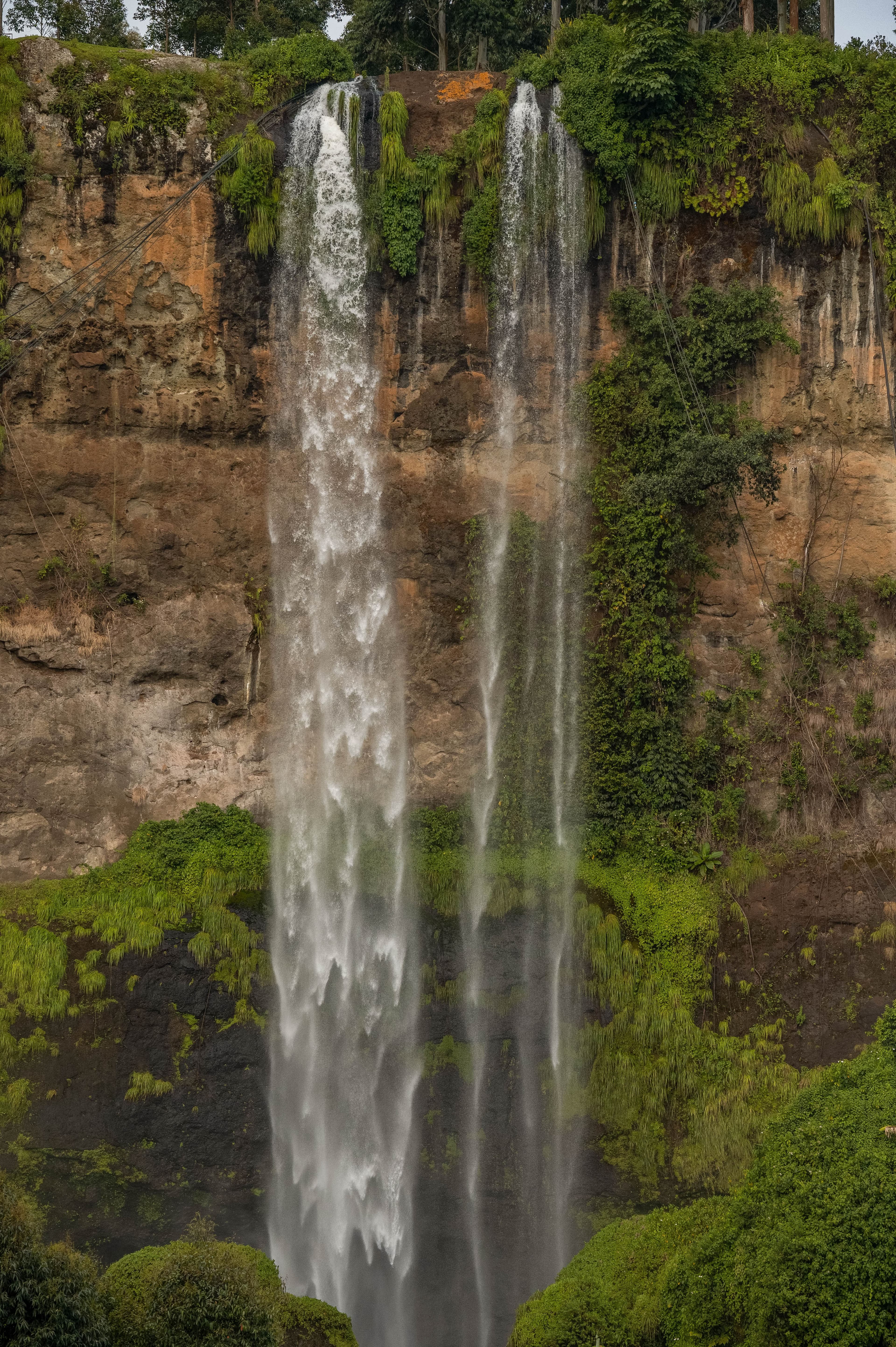
Sipi Falls
Everything Uganda
Sipi Falls is a series of three spectacular waterfalls cascading down the southern slopes of Mount Elgon in eastern Uganda — Sipi Falls itself at 95 metres, Simba Falls at 74 metres, and Ngasire Falls at 85 metres. Set against rolling green hills and terraced farmland, this is one of the most photographed landscapes in the country, and one of Uganda's most rewarding short hiking destinations.
The Sipi region is also Uganda's premier Arabica coffee country. The volcanic soil on Mount Elgon's slopes produces some of East Africa's finest specialty coffee, grown by Bagisu farming families who have worked this land for generations. A coffee tour here — from picking the cherries to roasting and cupping the final brew — is one of the most genuine agritourism experiences in Uganda, and pairs naturally with a morning spent hiking to the falls.
What to Do
Guided waterfall hikes — trails to all three falls, ranging from an easy walk to a more challenging full loop. The walk behind Sipi Falls, where the path passes directly behind the curtain of water, is the highlight.
Coffee farm tours — visiting Bagisu family farms to learn the full process from bean to cup, with the option to roast and taste your own batch.
Abseiling — descending the main 100-metre waterfall for the more adventurous visitor.
Mountain biking — trails through the surrounding hills and villages, with sweeping views over the Karamoja plains to the north.
Cultural visits — engaging with the Bagisu communities who farm and live on Mount Elgon's slopes.
Key Facts
Three waterfalls: Sipi Falls (95m), Simba Falls (74m), Ngasire Falls (85m) — all within a 3km radius.
Located on the southern slopes of Mount Elgon National Park, near Kapchorwa town.
Getting there: 4–5 hours from Kampala to Mbale (215km), then 55km north to Sipi.
Best time to visit: the falls are at their fullest and most dramatic during the wet seasons (March–May, October–November), though the region is scenic and accessible year-round.
Combines naturally with a Mount Elgon trek or as part of an eastern Uganda circuit including the Imbalu circumcision ceremony in the Mbale area (held every even year).