
Kidepo Valley National Park
Everything Uganda
Kidepo Valley National Park occupies the extreme north-eastern corner of Uganda, bordering South Sudan, in a landscape that feels like it belongs to another era entirely. It is consistently ranked among Africa's finest wilderness safari destinations by travel writers and conservation organisations — not despite its remoteness, but because of it. CNN Travel has named it one of Africa's top national parks. With fewer than 3,000 visitors per year, no other top-tier African park comes close to this level of solitude.
The park encompasses sweeping semi-arid savanna valleys punctuated by granite outcrops, the Kidepo River, and the Narus Valley — the park's wildlife heartland, where animals concentrate around permanent water in the dry season. Kidepo contains species found nowhere else in Uganda: ostriches, cheetahs, bat-eared foxes, aardvarks, klipspringers, and Karamojong giraffes. The surrounding Karamoja region is home to the Karamojong people, a semi-nomadic pastoralist community whose cattle-centred culture and traditional dress are among the most distinctive in East Africa.
What to Do
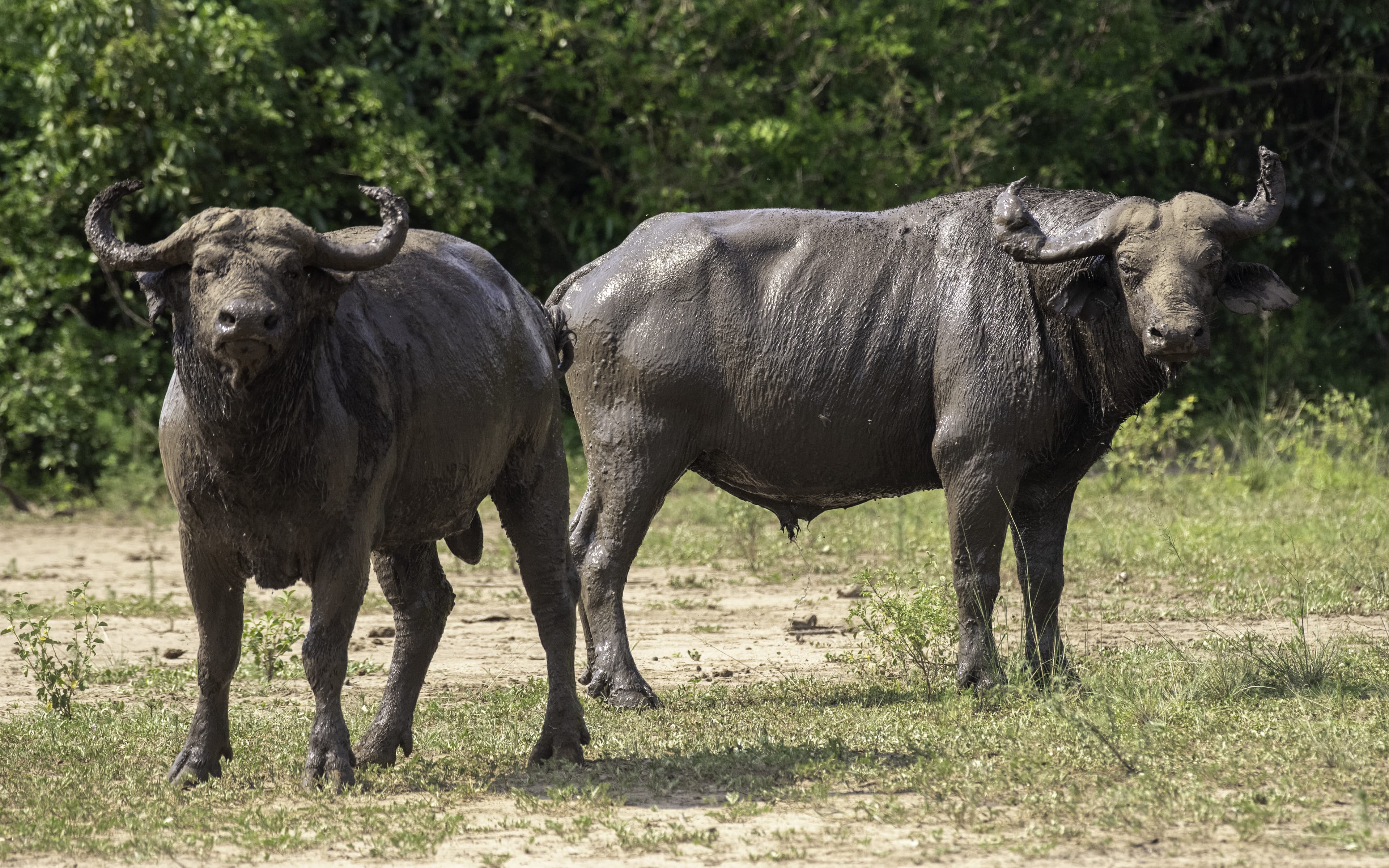
Game drives in the Narus Valley — the best wildlife concentration in the park, where lions, elephants, buffaloes, zebras, ostriches, and Uganda kobs gather around the permanent springs.
Kidepo Valley drives — the northern section of the park, more remote and wild, where cheetahs and bat-eared foxes have been sighted.
Cultural visits to Karamojong communities — meeting the Karamojong cattle people, experiencing traditional dances, homestead visits, and the living culture of one of Uganda's most distinctive peoples.
Birding — 475 species including the Ostrich (found nowhere else in Uganda), Abyssinian Roller, Karamoja Apalis, Fox's Weaver, and Secretary Bird.
Hiking on Mount Morungole — day hikes into the Didinga Hills on the South Sudan border, with sweeping views across the Kidepo Valley.
Key Facts
Wildlife unique to Uganda in Kidepo: ostriches, cheetahs, bat-eared foxes, aardvarks, klipspringers, black-backed jackals.
Mammal species: 77. Bird species: 475 — the second-highest count of any Uganda park.
Annual visitors: fewer than 3,000 — one of the least-visited premier safari destinations in Africa.
Getting there: 700km from Kampala — 10 hours by road or 1.5 hours by chartered aircraft to Apoka airstrip. The drive through Karamoja is an experience in itself.
Best time: December–March (dry season, Narus Valley). June–September also good. Avoid heavy rains April–May and October–November.